国际新闻
Peta releases video showing experiments on infant monkeys at University of Washington
来源: World news | The Guardian · 发布于
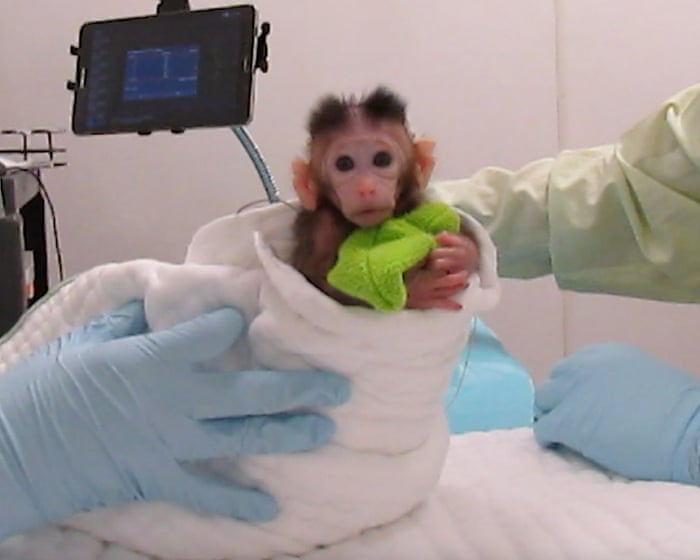
Animal-rights group released video footage that shows distressed baby macaques undergoing lab experiments Footage released by the animal-rights group Peta reveals, for the first time, filmed experiments at the University of Washington’s National Primate Research Center (WaNPRC),
Animal-rights group released video footage that shows distressed baby macaques undergoing lab experiments Footage released by the animal-rights group Peta reveals, for the first time, filmed experiments at the University of Washington’s National Primate Research Center (WaNPRC), in which newborn monkeys were separated from their mothers and subjected to neurological tests after prenatal exposure to a neurotoxin. Records show that the infant monkeys, some just two days old, were used in research on domoic acid, a toxin produced by marine algae that accumulates in shellfish and can cause illness in humans. The experiments were part of a project that ran for six years until 2020.
Continue reading...
相关报道

Can we really predict the future? Over one million forecasts offer clues, not certainty
Can crowds of people trading on what they believe will happen collectively predict the future? A new Tel Aviv University study of more than 1 million forecasts suggests that they often come remarkably close. But when it comes to certain events, from international conflicts to ele
Phys.org - latest science and technology news stories ·

Crows make decisions twice as fast as humans and monkeys
University of Tübingen researchers have shown that crows, when confronted with a visual choice, make a decision twice as fast as humans and monkeys. In the experiment, two carrion crows took just 235 milliseconds on average to identify the direction in which a dot pattern was mov
Phys.org - latest science and technology news stories ·

How screening tools measure disadvantage may leave rural communities overlooked for public support
Whether a community is prioritized for public support can depend on how its needs are measured, according to new research from the University of New Hampshire. The study found significant differences in how government screening tools identify communities, particularly in rural ar
Phys.org - latest science and technology news stories ·

Sea cucumber–inspired gel could help heal damaged tissue in humans
Inspired by the ability of sea cucumbers to change the stiffness of their bodies, University of Waterloo researchers have developed a gel that could one day help repair damaged tendons and other soft tissues without leaving permanent material behind.
Phys.org - latest science and technology news stories ·
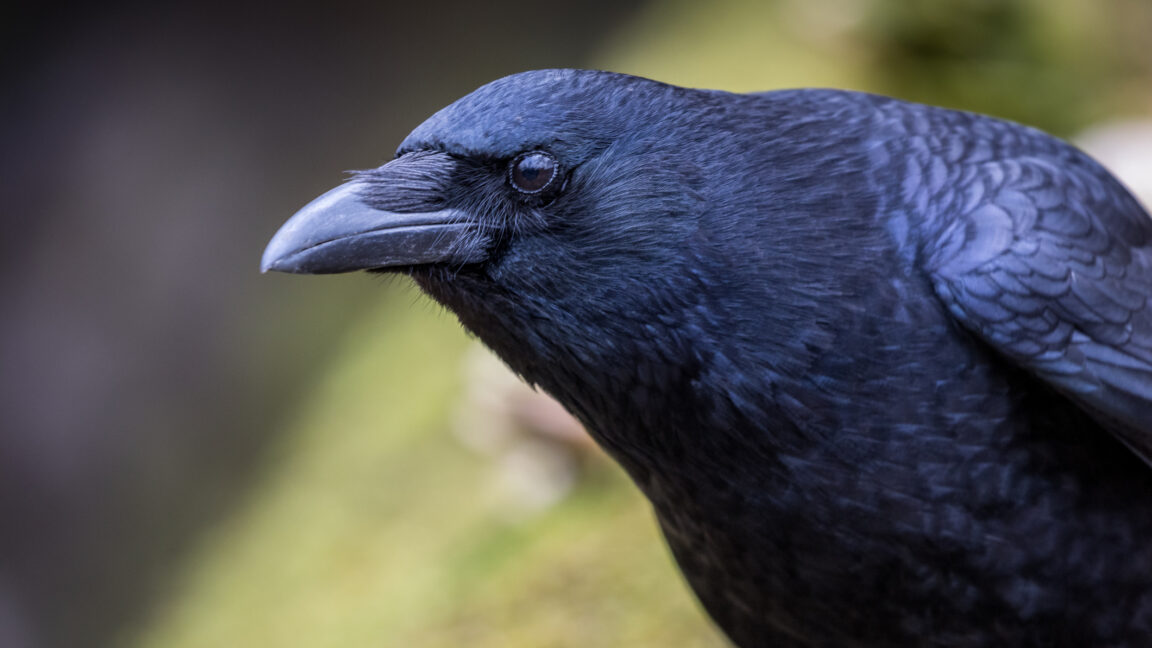
Crows can evaluate visual info twice as fast as mammals
Much of what we know about how a brain makes decisions comes from studying monkeys watching dots. In a task known as a random-dot-motion task, a cloud of flickering specks drifts weakly in one direction while the subject tries to determine whether—and in which direction— it’s mov
Ars Technica - All content ·