التقنية والذكاء الاصطناعي
Venus' mysterious haze is actually cosmic dust
المصدر: Ars Technica - All content · نُشر
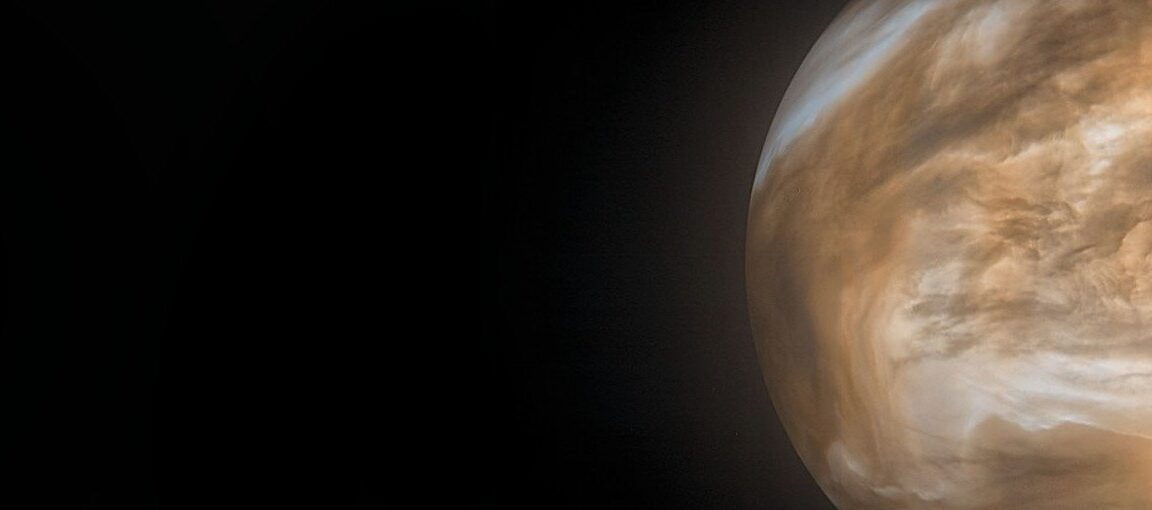
Venus is shrouded in a veil of mystery. The yellowish “lower haze” at the bottom of its atmosphere was discovered by the Venera and Pioneer Venus probes in the 1970s. These spacecraft were some of the first to successfully send images of the planet back to Earth, but the haze the
Venus is shrouded in a veil of mystery. The yellowish “lower haze” at the bottom of its atmosphere was discovered by the Venera and Pioneer Venus probes in the 1970s. These spacecraft were some of the first to successfully send images of the planet back to Earth, but the haze they saw went unexplained for decades.
Now the mystery Venus was keeping has been unveiled. What nobody knew then was that the haze is an accumulation of particles from meteorites. “Shooting stars” that burn up in the atmosphere leave behind cosmic dust particles, and after sulfuric acid interacts with these particles, it leaves behind a haze.
Planetary scientist Hiroki Karyu and his research team at Tohoku University in Sendai City, Japan, finally figured out how the haze formed using a microphysical model. This type of model involves microphysics —the micro-scale processes that create clouds and precipitation on Earth and other bodies. “The continuous influx of cosmic dust is sufficient to sustain this lower haze layer with the particle size distribution observed by the entry probes,” Karyu said in a study published in Nature Astronomy.
“These haze particles of cosmic origin act as efficient condensation nuclei, promoting cloud formation in the main cloud deck even far from their initial source.” Read full article Comments
أخبار ذات صلة
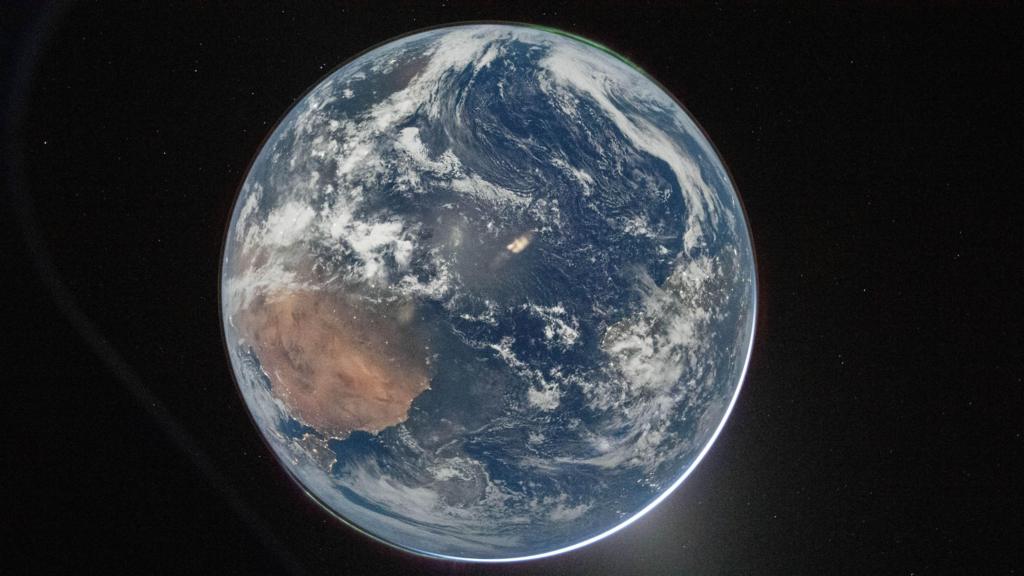
The 40 minutes when the Artemis crew loses contact with the Earth
As the astronauts pass behind the Moon they will experience a moment of silence and solitude as communication with the Earth is blocked.
feeds.bbci.co.uk ·
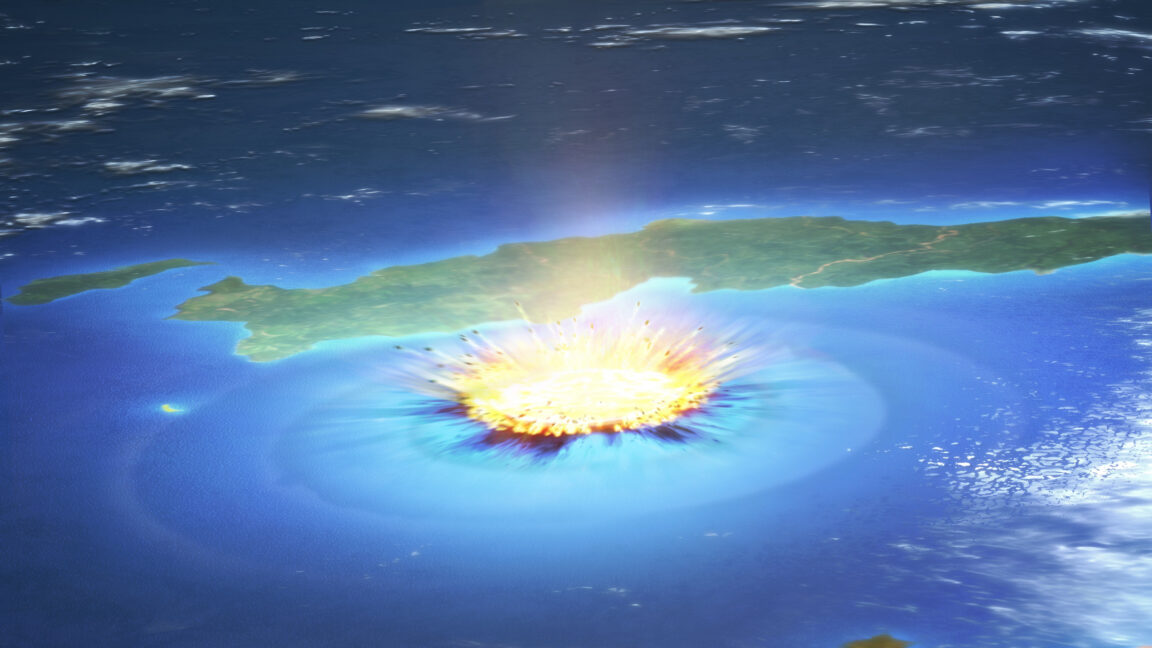
Dinosaur-killing impact crater might have been teeming with life
About 66 million years ago, the Chicxulub asteroid smashed into Earth, kicking up tsunamis and dropping hot debris that annihilated non-avian dinosaurs and many other species. But not everything it left in its wake was destructive. This space rock hit what is now the partially su
Ars Technica - All content ·

Webb provides crash course on planet-shattering collisions
In the early history of our solar system, scientists theorize that a Mars-sized object called Theia smashed into the infant Earth, vaporizing massive amounts of rock and blasting it into space. Some of that material coalesced into the moon, where NASA's Artemis program is returni
Phys.org - latest science and technology news stories ·
Pompeii’s 2,000-year-old eruption just gave scientists a better clock for Earth’s past
Mount Vesuvius’ famous 79 CE eruption has given scientists a remarkably precise benchmark for dating events deep in Earth’s past. The improved technique could sharpen the timelines of volcanic eruptions, asteroid impacts, extinctions, and other major moments in geological history
All Top News -- ScienceDaily ·

Orionid meteor shower to streak across night sky this week
The Orionid meteor shower peaks in October as Earth passes through debris left behind by Halley’s Comet.
feeds.bbci.co.uk ·