科技与人工智能
The Internet’s undersea backbone is slipping into the danger zone
来源: Ars Technica - All content · 发布于
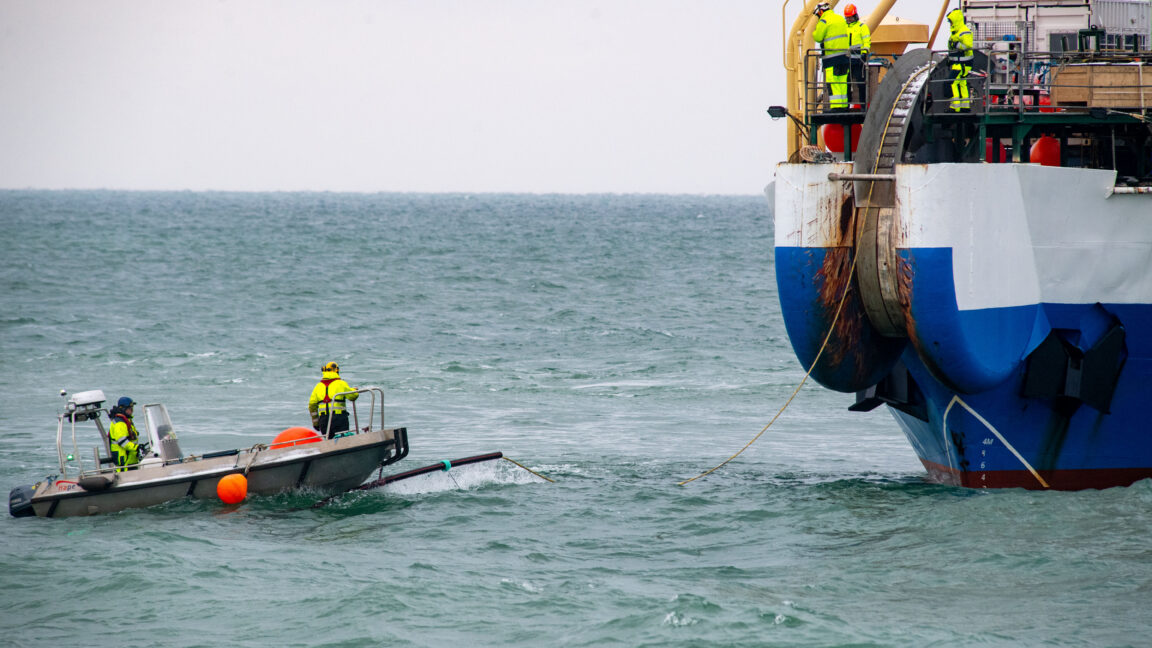
Despite the expansion of Starlink and other communications satellite services, most of the world’s Internet traffic still travels through subsea cables crisscrossing the ocean floors. Those fiber-optic cables coexist with a network of oil and gas pipelines and submarine power cab
Despite the expansion of Starlink and other communications satellite services, most of the world’s Internet traffic still travels through subsea cables crisscrossing the ocean floors. Those fiber-optic cables coexist with a network of oil and gas pipelines and submarine power cables—and all these crucial links connecting countries and continents now face growing sabotage risks as gray-zone warfare and open conflicts have become widespread. The rising risks to the world’s invisible infrastructure beneath the waves are the main subject of a new book by Elisabeth Braw , a senior fellow at the Atlantic Council who leads the Threats to the Global Maritime Order Initiative .
Her book, titled Undersea War , explores the modern rise in suspicious incidents in which ships dragging their anchors for unusually long periods have cut or damaged undersea cables and pipelines from the Baltic Sea to the Pacific Ocean. Braw acknowledges that about 60 percent of undersea cable damage is primarily due to human error during fishing and shipping activities, when weighted nets or anchors drag across the seabed. Natural hazards such as storms and undersea landslides also account for a smaller proportion of such incidents.
In total, between 150 and 200 cables are damaged each year and usually repaired quickly. Read full article Comments
相关报道
Starlink India launch: Why Elon Musk is still waiting
Despite securing key approvals, the Starlink satellite internet service remains in regulatory limbo, raising questions about security clearances, competition and India’s investment climate.
World | Deutsche Welle ·

Anthropic warns small AI models could self-replicate through IoT devices
AI company Anthropic is warning that advances in small AI models could soon usher in a new era of self-replicating malware that’s capable of infecting smart fridges, vacuum cleaners, and a wide range of other Internet-of-things devices and is more resistant to takedown. By next y
Ars Technica - All content ·

OpenAI, Google pushing new AI models easily tricked into making nudes, researchers say
Safety researchers continue to warn that a large volume of AI-generated explicit content is spreading unchecked, while regulators do little to meaningfully stop it. This non-consensual content is commonly shared in text and direct messages or stored in private clouds where it’s l
Ars Technica - All content ·

Starlink restrictions affecting Ukraine's front line operations, Kyiv says
Elon Musk's system allows Kyiv to protect Ukrainian skies and effectively guide drones to Russian targets.
feeds.bbci.co.uk ·

Ukraine’s Vulnerability Grows as Starlink Is Restricted and Russia Escalates
A huge attack cut power to 600,000 people in Kyiv, and a Pentagon-funded satellite program appeared to be curbed without warning.
NYT > World News ·