商业与经济
The climate crisis will destroy our economies – we learned this 20 years ago. When will we act? | Fiona Harvey
来源: Business | The Guardian · 发布于
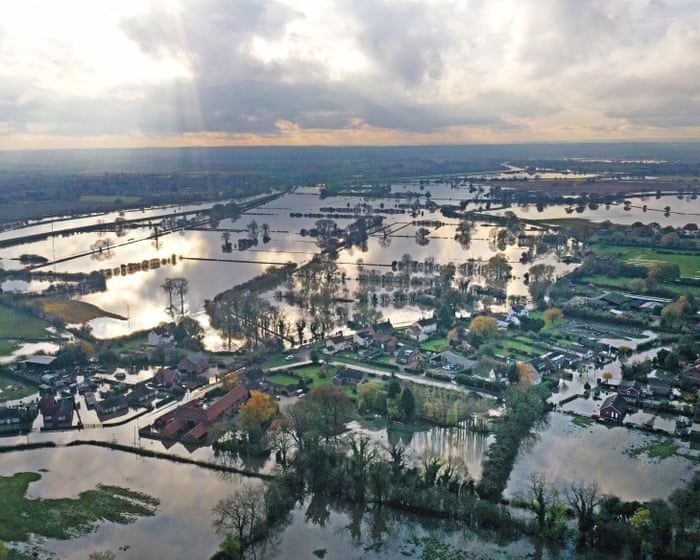
The radical Stern report showed that a low-carbon future is also good economics. But it seems that capitalism needs a reminder Saving the only planet we have makes good economic sense. There is, after all, no money to be made on a dead Earth. There may be costs involved now, but
The radical Stern report showed that a low-carbon future is also good economics. But it seems that capitalism needs a reminder Saving the only planet we have makes good economic sense. There is, after all, no money to be made on a dead Earth.
There may be costs involved now, but they are worth paying to protect our children from certain destruction. These propositions seem self-evident now. But two decades ago, mainstream economists had very different ideas.
They had proved that the climate crisis would be a mere economic blip, easily absorbed by growing economies and therefore not worth spending money on. In their accounting, they considered ice caps and glaciers functionally worthless, that trees only add to GDP when they are cut down, and that a livable climate shouldn’t even merit a line on a spreadsheet. Fiona Harvey is an environment editor at the Guardian Continue reading...
相关报道

The way Earth's 'thermostat' works may have changed during Pangea era
Life arose on Earth at least 3.5 billion years ago, and our planet has remained habitable ever since—not too hot, not too cold. These life-sustaining conditions are possible in part thanks to a built-in, carbon cycle–based climate "thermostat" that controls the amount of carbon d
Phys.org - latest science and technology news stories ·
A rock plunged 90 kilometers into Earth and revealed something unexpected
Scientists discovered a rock in Papua New Guinea that plunged more than 90 kilometers beneath Earth's surface, revealing a bizarre temperature pattern that challenges established theories of Earth's interior. The unexpected shift from unusually hot to relatively cold conditions c
All Top News -- ScienceDaily ·

Researchers discover why some frogs have escaped the current amphibian mass extinction
Amphibians are the most threatened vertebrates on Earth, with 41% of species facing extinction. In the highlands of Central and South America, a killer fungus has wiped out much of the once-abundant amphibian diversity. Yet in the Sierra Nevada de Santa Marta, an isolated mountai
Phys.org - latest science and technology news stories ·
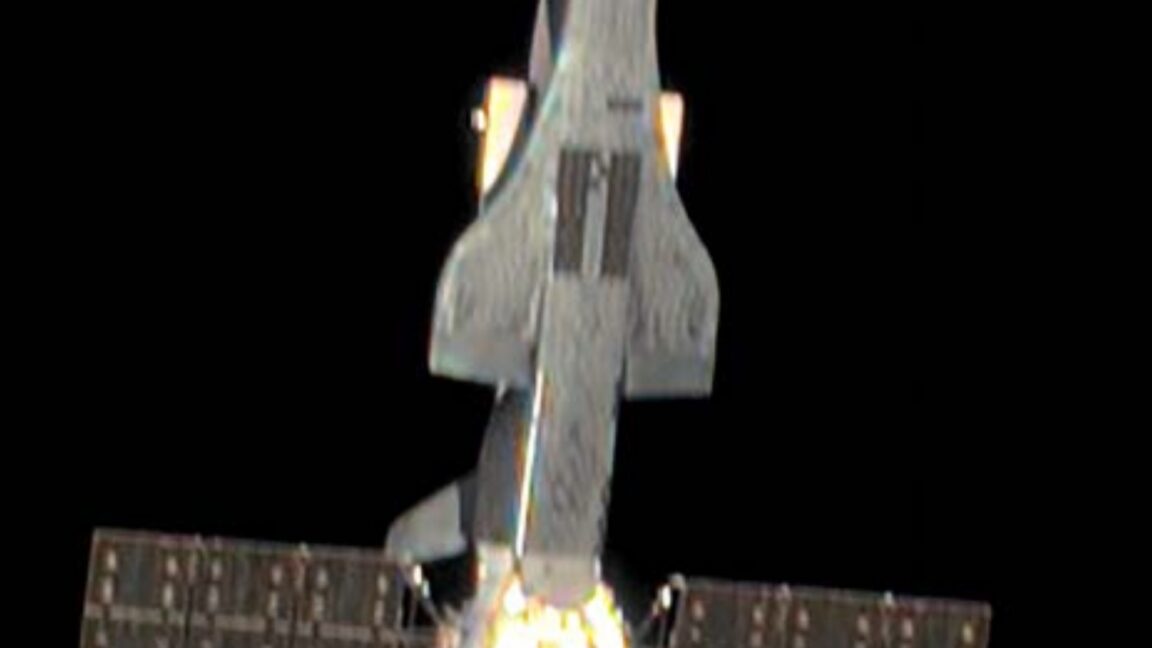
China's top-secret spaceplane can't hide in low-Earth orbit
A winged Chinese spacecraft bearing a strong resemblance to the US military's X-37B spaceplane was photographed in orbit by a passing US-owned commercial satellite in 2024, and we finally have the image. The Chinese spaceplane has delta wings, payload bay doors, a dark heat shiel
Ars Technica - All content ·
A 2,700-year-old solar eclipse just revealed something surprising about Earth
A solar eclipse recorded more than 2,700 years ago is revealing surprising secrets about Earth's rotation and the Sun's ancient behavior. By correcting an eight-kilometer error in the location of an ancient Chinese capital, scientists were able to reconstruct a total solar eclips
All Top News -- ScienceDaily ·