科技与人工智能
Researchers use AI to design proteins that cut up other proteins
来源: Ars Technica - All content · 发布于
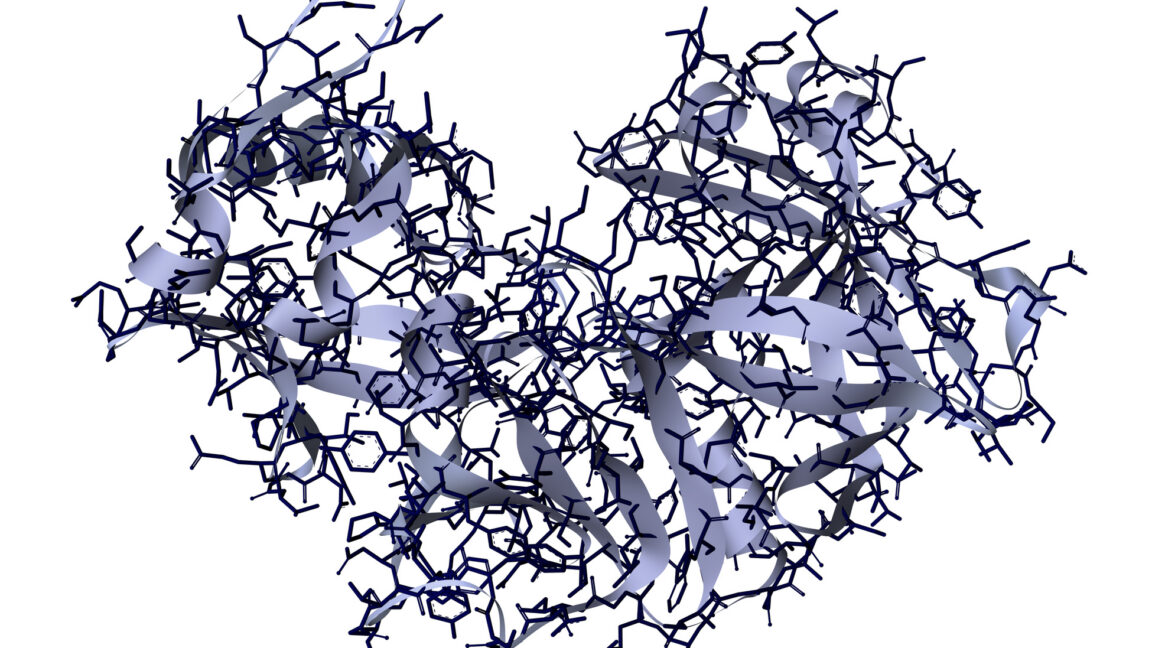
A protein is a chain of amino acids held together by what are called peptide bonds. On their own, those bonds are extremely stable; they're estimated to have a half-life of several hundred years. But in Earth's environment, most proteins don't last nearly that long. That's becaus
A protein is a chain of amino acids held together by what are called peptide bonds. On their own, those bonds are extremely stable; they're estimated to have a half-life of several hundred years. But in Earth's environment, most proteins don't last nearly that long.
That's because organisms have evolved a handful of ways to catalyze the break-up of peptide bonds, which have diversified into countless specialized protein-digesting enzymes. Proteases are everywhere and generally make short work of any proteins that find their way into the environment. Now, researchers have basically short-circuited the diversification process, using AI-based protein design tools to take the catalytic core of two types of protease and replace the entire rest of the protein.
The resulting enzymes could be tuned to cut specific proteins in half, and the researchers demonstrated their effectiveness by using them to cut proteins associated with neurological diseases. Cutting proteins The basic peptide bond isn't especially interesting-looking—it's what you get when you link an amino group to an acid, releasing a water molecule in the process. As their name implies, amino acids have both an amino and an acid group, allowing them to form peptide bonds on two sides of the amino acid.
This is critical for building up the long chains found in proteins. (The amino acids also have side chains with distinctive chemistry, which gives a backbone specific properties.) Read full article Comments
相关报道

Fired OpenAI researchers say they were let go for 'prioritising safety'
The AI firm instead claims the researchers were fired for mishandling sensitive information.
feeds.bbci.co.uk ·

Mollusk family trees play a key role in shaping microbiomes, researchers find
A mollusk's microbial community has more to do with its family tree than its address. In other words, the composition of a mollusk's microbiome depends less on the environment in which it lives and more on what species it belongs to, say University of Michigan researchers.
Phys.org - latest science and technology news stories ·

Learning reshapes inhibitory synapses differently within the same nerve cell, study suggests
Our brain must be able to learn new things without losing previously stored information or the stability of its networks. Researchers at the Leibniz Institute for Neurobiology (LIN) in Magdeburg, together with partners in Bielefeld and Zurich, have investigated how this balance i
Phys.org - latest science and technology news stories ·
Cornell scientists identify rare human genetic disorder in two unusually long-legged cats
Two unusually long-legged cats have helped scientists uncover the first genetically confirmed cases of Marfan syndrome in domestic felines. Researchers at Cornell University discovered that the brothers carried two altered copies of a gene linked to the rare connective tissue dis
All Top News -- ScienceDaily ·
AI can act exactly like a human, but we still don't think it's conscious
A new study reveals that people draw a surprisingly sharp line between human consciousness and artificial intelligence, even when both behave identically. Researchers found that participants considered even the most responsive AI less conscious than the least responsive human. Ye
All Top News -- ScienceDaily ·