科技与人工智能
Rare meteorite from Mars gives us a view into its ancient crust
来源: Ars Technica - All content · 发布于
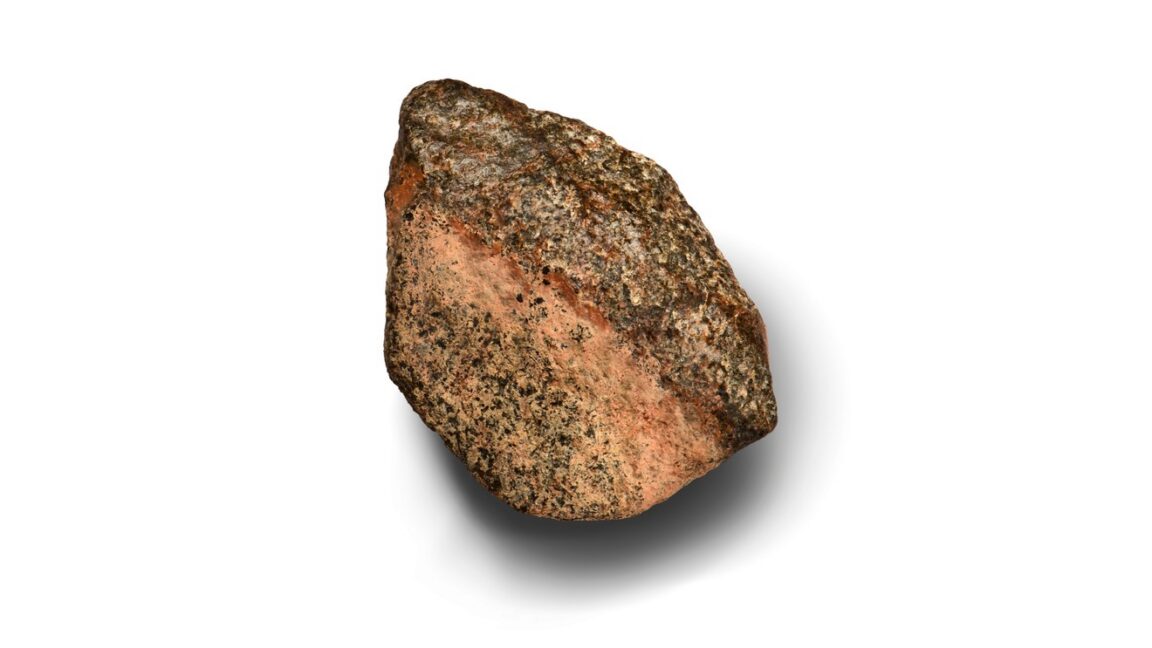
Crater counts tell us that most of the Martian surface is more than 3 billion years old, but pieces of Mars we have on Earth tell a different story. The three main classes of Martian meteorites—shergottites, nakhlites, and chassignites—are all 2.4 billion years old or younger. Un
Crater counts tell us that most of the Martian surface is more than 3 billion years old, but pieces of Mars we have on Earth tell a different story. The three main classes of Martian meteorites—shergottites, nakhlites, and chassignites—are all 2.4 billion years old or younger. Until now, only two genuinely ancient Martian meteorites were known: Allan Hills 84001, found in Antarctica, and a jumbled rock from northwest Africa nicknamed Black Beauty.
Now we have a third one. A team led by Yang Liu, a planetary scientist at NASA's Jet Propulsion Laboratory, has shown that a Martian meteorite called Teghaza 001, found in the Sahara Desert in Mali in 2022, formed at least 4.1 billion years ago. “It's very old and similar to some of the oldest rocks on Earth,” Liu says.
A filtered collection “We don't fully understand why old Martian rocks are so rare on Earth," Liu said. Part of the answer may lie in how a piece of Mars gets here. It takes a large impact to launch a rock off the planet, and not every rock can survive that.
“If the impact hits into loose powder, it may not get cemented to become a rock and fly off Mars' gravity,” Liu said. “So the natural impact already acts as a filter. Weak rocks do not make it off Mars.” Read full article Comments
相关报道

Mission blasts off for Mars to grab a piece of its moon
A spacecraft is set to launch on an ambitious mission to bring 10g of Martian moon dust back to Earth.
feeds.bbci.co.uk ·
Meteors don't just burn up. What really happens is far more violent
Scientists have uncovered seven surprising stages that space rocks go through as they hurtle toward Earth, revealing that melting and violent fragmentation, rather than simple evaporation, determine their fate. The discovery could help explain why meteorites scatter across the gr
All Top News -- ScienceDaily ·
Scientists discover a hidden oxygen reservoir deep inside Earth
Scientists have discovered that magma deep inside Earth can store surprising amounts of extra oxygen, potentially revealing a hidden contributor to our planet's oxygen-rich atmosphere. The findings suggest that ancient volcanic eruptions may have helped transform Earth's atmosphe
All Top News -- ScienceDaily ·

I Gave My Blood to the AI Death Clock
Death Clock promises to predict when you’re going to die and help you extend your time on Earth. After a month, I felt like it was sucking the life out of me.
WIRED ·
Scientists confirm global warming is accelerating faster than ever recorded
Earth is warming faster than ever recorded, with scientists detecting a major acceleration in global temperatures since around 2015. A new study reveals that the warming rate has surged to approximately 0.35°C per decade, nearly double the average pace observed from 1970 to 2015.
All Top News -- ScienceDaily ·