科技与人工智能
“Race realism” isn’t realistic—and it isn’t good science
来源: Ars Technica · 发布于

At this year’s World Economic Forum meeting in Davos, US President Donald Trump stated that people from Somalia have low IQs. “I always say these are low-IQ people,” he said in his speech. His son, Donald Trump Jr, made a similar statement about Haitian people in 2024 (Trump’s go
At this year’s World Economic Forum meeting in Davos, US President Donald Trump stated that people from Somalia have low IQs. “I always say these are low-IQ people,” he said in his speech. His son, Donald Trump Jr, made a similar statement about Haitian people in 2024 (Trump’s government has since ended the protected status of both Somali and Haitian migrants in the US).
These statements and their consequences are symptoms of a growing trend in Western politics: the re-emergence of racial views of human nature that have been largely in hiding for the past 70 years. Narratives about the innate intellectual inferiority of black or brown people compared with white people—which can still be found in academic journals today—are fuelling far-right propaganda in some of the world’s largest democracies. Such claims underpin misinformation strategies on social media and bolster political movements.
These narratives are sometimes euphemistically referred to as “ race science ” or more recently “race realism.” But, as we argue, they are not actually scientific. One member of this community, Nathan Cofnas , recently attracted public attention by accusing the late Jason Arday of plagiarism. Read full article Comments
相关报道

People wade through floodwater because they underestimate danger—how to avoid risk
A footpath home disappears beneath brown water. The other side is only a few meters away and someone has already crossed. Turning back means a long detour and you will be late. Would you wade through? This is the kind of everyday decision that flood safety advice must address.
Phys.org - latest science and technology news stories ·

Race, illness, injury, repeat - REDs and why men are suffering in silence
British long-distance runner Jake Smith was enduring a relentless pattern of race, illness, injury, repeat - he had no idea he had REDs and was under-fuelling.
feeds.bbci.co.uk ·

Race to lead Senate Democrats the latest battlefield in party’s tussle over Israel
Chris Van Hollen and Chuck Schumer represent conflicting visions on issue that has become ‘litmus test’ for Democratic voters The race to lead the Democratic Party’s incoming Senate majority has become the latest battlefield between two conflicting visions for how the US should r
World news | The Guardian ·
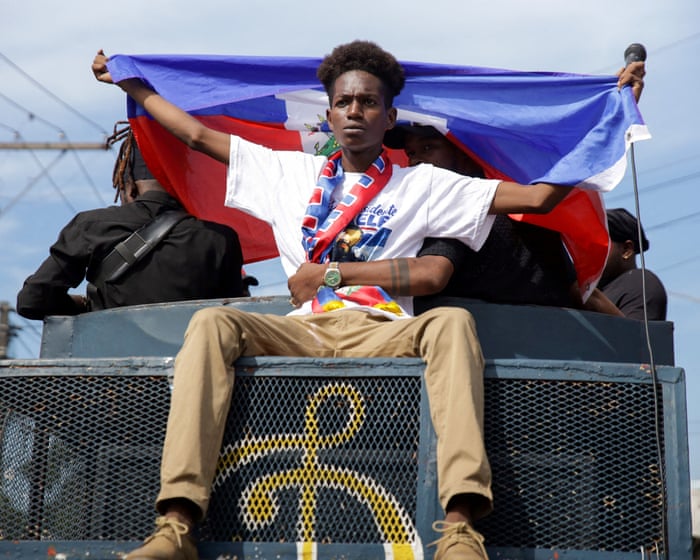
Haitians excited but uneasy as El Salvador troops fight gangs
Foreign combatants in Port-au-Prince welcomed by many after years of gang control but some fear offensive could exacerbate volatile situation A bullet-peppered mural of the Haitian striker Emmanuel Sanon covers the facade of Port-au-Prince’s main football ground. But more than tw
World news | The Guardian ·

The networking paradox: Knowing more people can make you less trustworthy
In the business world, knowing the right people is often considered a passport to success. A well-connected professional can introduce colleagues to new clients, bring together experts from different departments or create collaborations that would otherwise never happen. But ther
Phys.org - latest science and technology news stories ·