科技与人工智能
R.I.P. Margaret Hamilton, whose code saved the Apollo 11 Moon landing
来源: Ars Technica - All content · 发布于
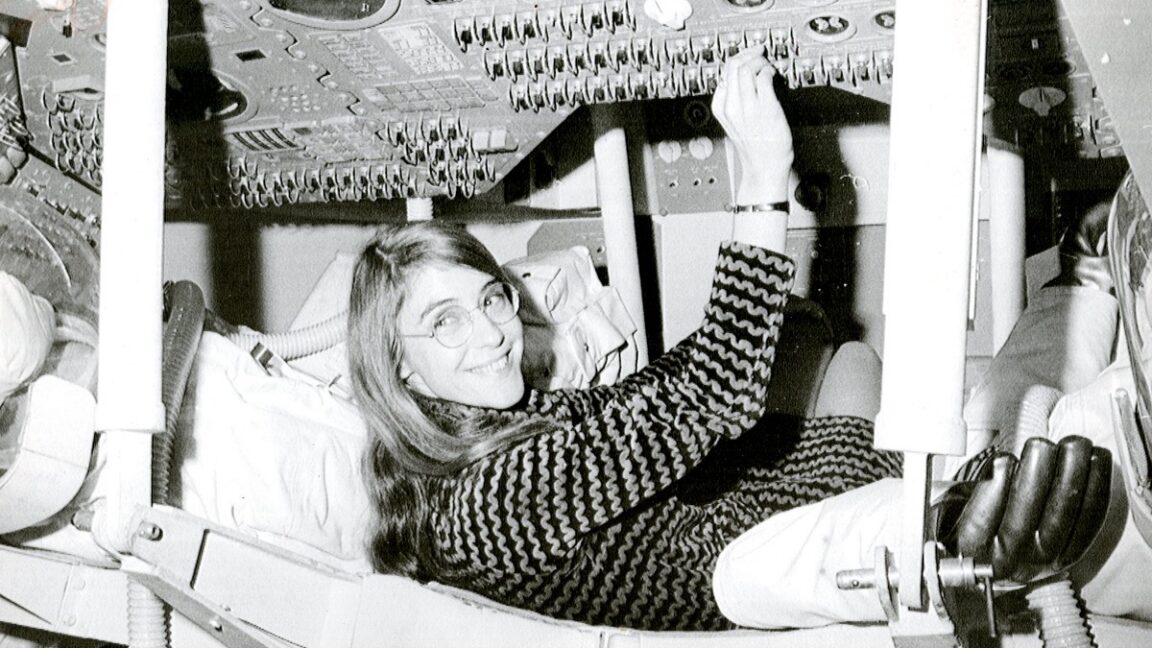
Margaret Hamilton, who coined the term "software engineering" and led the development of on-board flight software for NASA's Apollo program in the 1960s, died last week at the age of 90. A recipient of the Presidential Medal of Freedom in 2016, Hamilton was also immortalized as a
Margaret Hamilton, who coined the term "software engineering" and led the development of on-board flight software for NASA's Apollo program in the 1960s, died last week at the age of 90. A recipient of the Presidential Medal of Freedom in 2016, Hamilton was also immortalized as a LEGO minifig the following year—part of the "Women of NASA" set that also included astronauts Mae Jemison and Sally Ride. “To say Margaret Hamilton was a pioneer—to say she was ahead of her time—would be a dramatic understatement.
She was a software engineer at a time when that field was in its infancy, and she not only developed advanced code herself but also led a team in using that nascent technology to develop one of the most complex systems humanity had ever achieved,” said Olivier de Weck , interim head of the MIT Department of Aeronautics and Astronautics. “The Apollo program still stands as one of our greatest testaments to the power of collaboration, ingenuity, and engineering, and Hamilton was a fundamental contributor to that program’s success.” Born in 1936 in Paoli, Indiana, Hamilton graduated from Earlham College in 1958 with a degree in mathematics and a minor in philosophy—the latter a nod to her father (a poet) and grandfather (a headmaster). She married her first husband, James Cox Hamilton, that same year.
The plan was for her to work until he finished his law degree, after which he would support her through graduate school to earn a PhD in mathematics. Read full article Comments
相关报道

Margaret Hamilton, whose software helped land Apollo 11 on the Moon, dies at 90
Pioneering computer scientist led the development of the software for Nasa's Apollo mission and was awarded the Presidential Medal of Freedom.
feeds.bbci.co.uk ·
NASA is searching for hidden caves to build its first Moon base
NASA is preparing for humanity’s first Moon base with three investigations that will hunt for underground shelters, uncover hidden ice, and track dangerous conditions on the lunar surface. The findings could reveal how astronauts can survive and thrive on the Moon while laying th
All Top News -- ScienceDaily ·

Moment Nasa scientist Margaret Hamilton receives presidential medal of honour
Barack Obama awarded the Apollo 11 software engineer with the America's highest civilian honour in 2016.
feeds.bbci.co.uk ·

'It wasn't good enough' - Hamilton reveals 'huge' talks over Ferrari blunder
Lewis Hamilton has revealed Ferrari held a "huge discussion" to reflect on a strategic error at the Bahrain Grand Prix that he says "wasn't good enough".
SkySports | News ·
NASA’s Webb finds signs of Mars-sized worlds smashing together
NASA’s James Webb Space Telescope is giving astronomers a glimpse of the kinds of violent collisions that may have shaped our own solar system, including the giant impact thought to have created the Moon. By studying 21 rare “extreme debris disks” around young stars, researchers
All Top News -- ScienceDaily ·