科技与人工智能
PHP: The three little letters wreaking havoc across the web
来源: The Verge · 发布于

Two vulnerabilities found in the programming language PHP put enormous swaths of the internet in danger . By some accounts, up to 70 percent of websites use PHP in some capacity. It powers Wikipedia, WordPress, Drupal, and a host of other popular sites and platforms, including De
Two vulnerabilities found in the programming language PHP put enormous swaths of the internet in danger . By some accounts, up to 70 percent of websites use PHP in some capacity. It powers Wikipedia, WordPress, Drupal, and a host of other popular sites and platforms, including DeviantArt and 4Chan, which were temporarily shut down after the vulnerabilities were disclosed.
Even governments weren’t immune. But it’s not as simple as updating a few servers. The vulnerability exists in every version of PHP dating back roughly 20 years, many of which are no longer supported.
That means some older sites and services that are no longer actively maintained are at risk, leaving them with little option but to permanently shut down. Here’s all the latest developments in what security firm Wiz has called “among the most severe vulnerabilities discovered … in software history.” The Internet Archive was briefly forced offline because of PHP. Two old-school Japanese mobile games are shutting down over the PHP exploit.
The PHP2Shell exploit hit Cloudflare hard. PHP: The three letters that shut down sites all over the internet today GPT‑5.6 Sol was used to identify critical PHP flaw. A critical PHP vulnerability may take websites down today
相关报道

Zoe Kleinman: PHP is the cyber equivalent of an unexploded bomb
It has been a dramatic, public and global response, but the cyber event hasn't happened yet.
feeds.bbci.co.uk ·

Government websites in the EU and Canada taken offline over PHP vulnerability
All websites using PHP should update to the latest security patch.
Engadget - Technology News & Expert Reviews ·

Websites taken down worldwide as critical cyber-security update issued
The vulnerabilities with PHP, a programming language widely used across the internet, have been described as the most significant ever found by AI.
feeds.bbci.co.uk ·

PHP warns it plans to release 2 emergency patches imminently
Website admins, brace yourselves. Fixes for what are believed to be uncommonly severe vulnerabilities are scheduled to drop in a little more than 12 hours for PHP, a programming language that powers websites and Web applications everywhere. PHP maintainers said Monday that they p
Ars Technica - All content ·
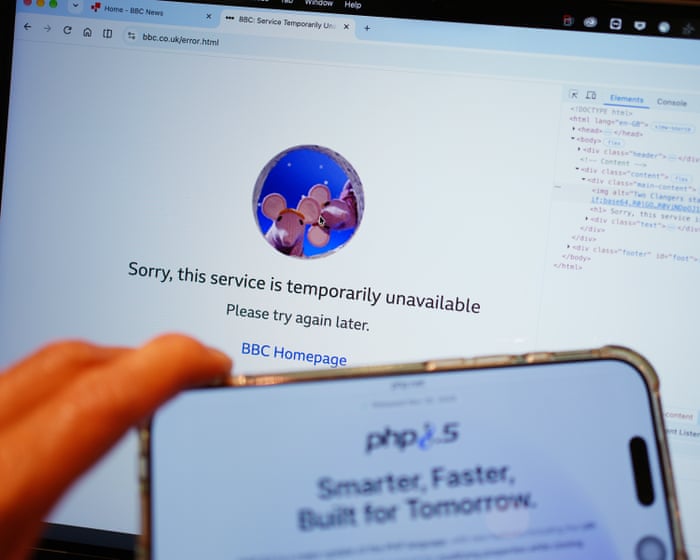
Websites across world hit by millions of attempts to exploit PHP code flaw
Problem in language that underpins 70% of sites has led governments and companies to pull sites offline to patch fault Tell us: have you been affected by the PHP code flaw? What is PHP, and how bad is the computer language flaw causing website shutdowns globally ? Websites around
Business | The Guardian ·