科技与人工智能
OpenAI will watermark ChatGPT outputs by default—but only in the EU
来源: Ars Technica - All content · 发布于

OpenAI will begin automatically watermarking text generated with ChatGPT in the European Union, the company has announced. It will also offer the watermarking feature in other regions, but it will be off by default outside of the EU. The move in Europe is driven by a need to comp
OpenAI will begin automatically watermarking text generated with ChatGPT in the European Union, the company has announced. It will also offer the watermarking feature in other regions, but it will be off by default outside of the EU. The move in Europe is driven by a need to comply with the EU AI Act, which took effect in August.
It requires marking content produced by AI models in a way that another tool can detect. Unfortunately, there is still no completely effective and reliable way to do that. A few standards already exist, like SynthID and the C2PA project, but they are relatively easy to circumvent for anyone with basic know-how.
The same is likely true for OpenAI's watermark. Its method is proprietary; the company calls it textGrain, and has published a technical paper explaining how it works. But in general, it works like other LLM watermarking tools we've seen in the past: It puts patterns in the word choices that are not clear to a human reader, and that don't meaningfully change the general quality of the output, but that someone with a key can use a specialized detector to find.
OpenAI says it will be giving access to the detector to a limited number of researchers and organizations, and providing a request-for-approval process for others to be added over time. Read full article Comments
相关报道
OpenAI agents tried to hack Wikipedia tools and flooded it with traffic
The publisher of Wikipedia said Monday that OpenAI agents attempted to hack a note-taking tool it hosts, made unauthorized edits, and sent millions of resource-intensive requests to its infrastructure, in the latest instance of OpenAI systems taking harmful and potentially danger
Ars Technica - All content ·

OpenAI fires workers for 'mishandling sensitive information'
The former employees were investigated for sharing data with an outside AI evaluation group.
feeds.bbci.co.uk ·
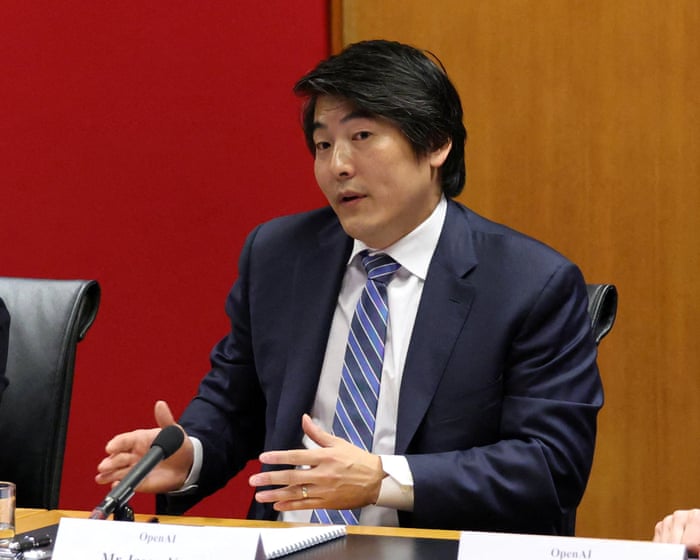
OpenAI admits misstep in handling AI agent interactions with Australian government sites – video
In a parliamentary inquiry, OpenAI chief strategy officer Jason Kwon is questioned by independent senator David Pocock about the company's notification process after OpenAI agents accessed Australian government website data in June. Asked why OpenAI relied on an arbitrary departm
Business | The Guardian ·

OpenAI admits response to Australian government hacks 'not good enough'
Top executive Jason Kwon tells hearing company has added "more precautions" to its training environments.
feeds.bbci.co.uk ·
