国际新闻
Nasa telescope launched in 2004 to plunge back to Earth after failed rescue mission
来源: World news | The Guardian · 发布于
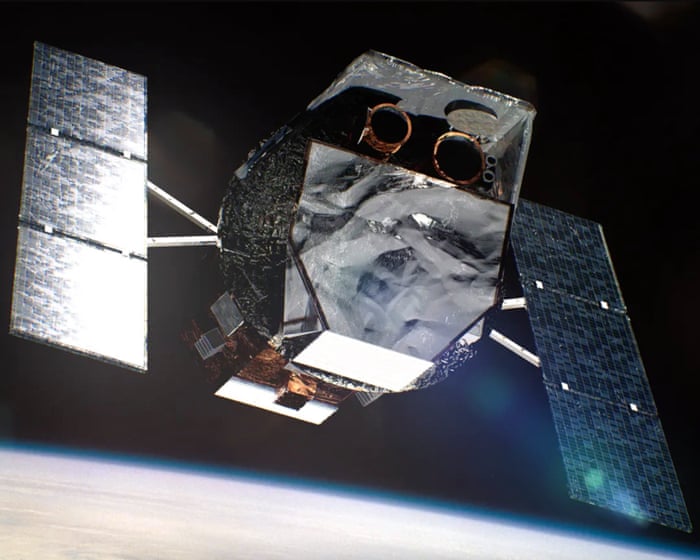
Neil Gehrels Swift Observatory is expected to re-enter Earth’s atmosphere Wednesday, burning up in the process Nasa’s Neil Gehrels Swift Observatory, which has spent two decades studying the most powerful explosions in the cosmos, is expected to re-enter the Earth’s atmosphere on
Neil Gehrels Swift Observatory is expected to re-enter Earth’s atmosphere Wednesday, burning up in the process Nasa’s Neil Gehrels Swift Observatory, which has spent two decades studying the most powerful explosions in the cosmos, is expected to re-enter the Earth’s atmosphere on Wednesday, burning up in the process. The satellite, which was designed to operate with its three telescopes for just two years, is no longer able to steer or observe, and its re-entry is uncontrolled. Continue reading...
相关报道
NASA reveals a haunting skull hidden in Antarctica’s ice
NASA satellites have captured an eerie, skull-shaped formation on a remote Antarctic island, but its haunting appearance conceals a troubling warning about melting glaciers. Unusually warm winter temperatures have exposed large areas of dark ice, potentially accelerating future m
All Top News -- ScienceDaily ·
NASA discovers Jupiter’s invisible shield is more complex than Earth’s
NASA’s Juno spacecraft has discovered that Jupiter uses a surprisingly complex system of powerful plasma waves and multiple shock regions to defend against the solar wind. The findings reveal major differences between Jupiter and Earth and could help scientists understand the eno
All Top News -- ScienceDaily ·
Meteors don't just burn up. What really happens is far more violent
Scientists have uncovered seven surprising stages that space rocks go through as they hurtle toward Earth, revealing that melting and violent fragmentation, rather than simple evaporation, determine their fate. The discovery could help explain why meteorites scatter across the gr
All Top News -- ScienceDaily ·
Scientists discover a hidden oxygen reservoir deep inside Earth
Scientists have discovered that magma deep inside Earth can store surprising amounts of extra oxygen, potentially revealing a hidden contributor to our planet's oxygen-rich atmosphere. The findings suggest that ancient volcanic eruptions may have helped transform Earth's atmosphe
All Top News -- ScienceDaily ·
Why South Africa's local elections matter
South Africans head to the polls on Wednesday amid water shortages, frustration with local services and questions over whether the ANC's support will keep falling.
World | Deutsche Welle ·