科学与环境
Nanoscale tech tracks proteins inside living neurons to guide Alzheimer's and Parkinson's drug discovery
来源: Phys.org - latest science and technology news stories · 发布于
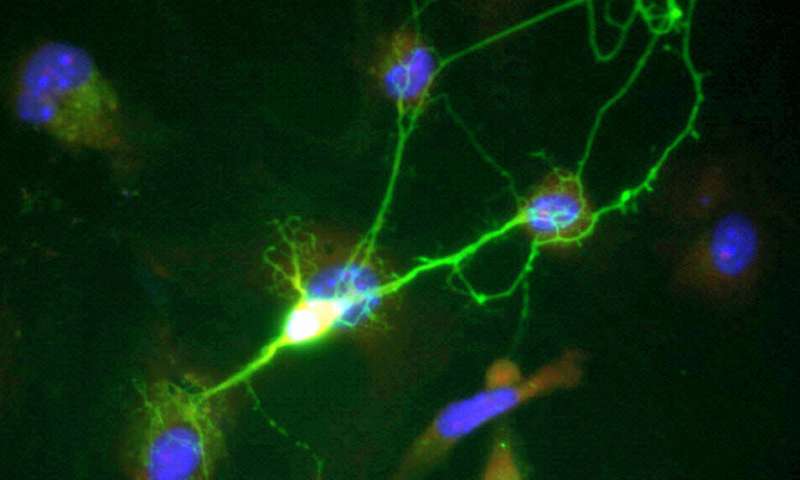
A technology developed at The University of Queensland allowing scientists to observe how disease-related proteins behave inside living neurons will be used to advance early drug discovery for neurodegenerative diseases. The NASTIC (Nanoscale Spatiotemporal Indexing Clustering) p
A technology developed at The University of Queensland allowing scientists to observe how disease-related proteins behave inside living neurons will be used to advance early drug discovery for neurodegenerative diseases. The NASTIC (Nanoscale Spatiotemporal Indexing Clustering) platform, spun out into Brisbane-based startup Accretion Bio, enables researchers to study real-time biological processes in living cells across space and time at the single-molecule level for the first time.
相关报道
Just 3,000 steps a day may help slow Alzheimer's, scientists find
Walking just 3,000 steps a day could help slow Alzheimer’s-related brain changes, according to new research. Scientists discovered that physical activity was linked to less buildup of harmful tau proteins and nearly half the cognitive and functional decline, even in people alread
All Top News -- ScienceDaily ·
NASA’s SpaceX launch lights up the sky with a giant glowing jellyfish
A SpaceX Falcon 9 rocket created a dazzling, jellyfish-shaped glow across the eastern United States as sunlight illuminated its exhaust during an early morning launch. The mission delivered equipment and scientific experiments to the International Space Station, including researc
All Top News -- ScienceDaily ·
Scientists may have overlooked a hidden Alzheimer's culprit for decades
For decades, scientists have focused on amyloid beta as a major culprit behind Alzheimer’s disease, spending billions of dollars developing treatments that have often delivered disappointing results. Now, researchers at UC Santa Cruz are drawing attention to a largely overlooked
All Top News -- ScienceDaily ·

Q&A: How does technology help track foodborne pathogens and outbreaks?
After a cyclospora outbreak and recalls of imported beef over the summer, a recent Gallup poll found that Americans' confidence in food safety has fallen to a record low, and consumers may be wondering how foodborne illness outbreaks can be tracked and mitigated.
Phys.org - latest science and technology news stories ·

Students take up to 88 standardized tests before high school, but more testing doesn't improve learning
The public K-12 school system in the United States has become pervasively shaped by standardized testing.
Phys.org - latest science and technology news stories ·