科技与人工智能
Ice sheet expansion may have started 2,000 years ago, but we canceled that
来源: Ars Technica - All content · 发布于
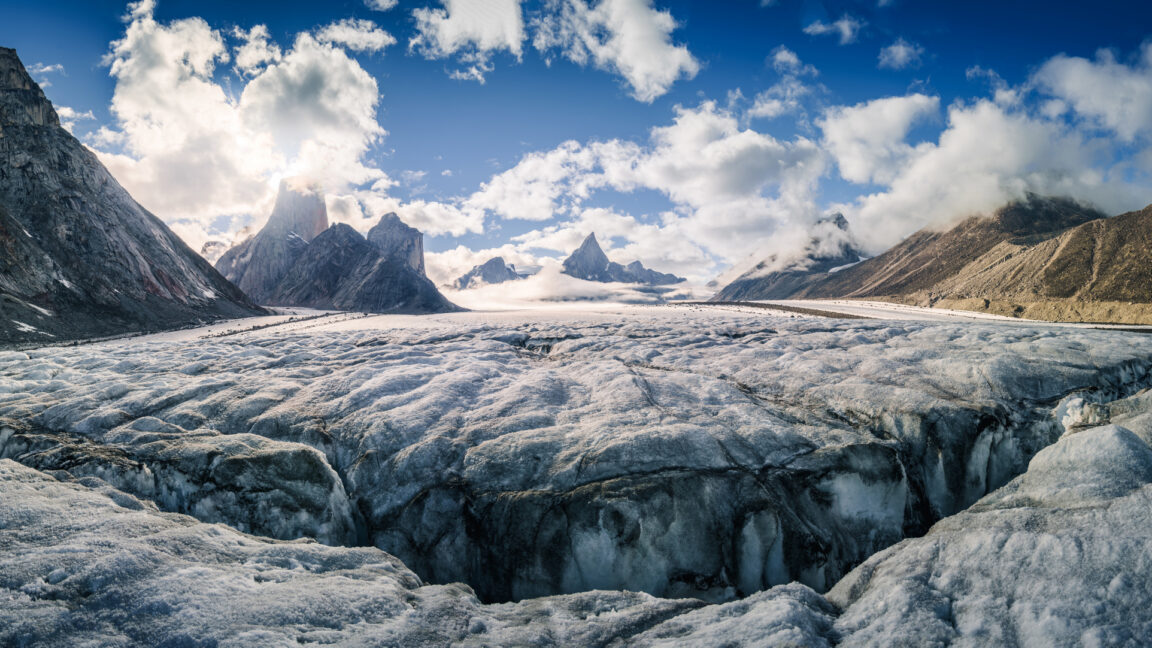
Barnes Ice Cap sits on the central plateau of Baffin Island, in the Canadian Arctic. It is the last surviving fragment of the Laurentide Ice Sheet, the largest of the Pleistocene ice sheets, which at its peak buried most of Canada under two miles of ice and locked away around 80
Barnes Ice Cap sits on the central plateau of Baffin Island, in the Canadian Arctic. It is the last surviving fragment of the Laurentide Ice Sheet, the largest of the Pleistocene ice sheets, which at its peak buried most of Canada under two miles of ice and locked away around 80 meters of sea level. That remnant has now yielded direct physical evidence that ice sheets might have reversed their retreat and started to grow again thousands of years ago.
In a recent Science study, researchers show that the Laurentide reached its smallest size about 3,600 years ago, then started re-expanding roughly 2,000 years ago, which the team interprets as the opening move of the next glaciation. Apparently, this brand-new ice age was on its way until about 1960, when human-caused climate warming reversed it. Frozen to the bed “Barnes is the last remaining piece of one of the domes of the Laurentide Ice Sheet,” says Nicolás Young, a geologist at Columbia University's Lamont-Doherty Earth Observatory and lead author of the study.
As that enormous dome thinned through the Holocene, its margin withdrew up onto Baffin Island, and what's left today is the deflated core of something that was once two miles thick. The reason Barnes can testify about its own history, Young explains, comes down to the temperature at its base. Read full article Comments
相关报道
A hidden bias in human language challenges 70 years of science
A groundbreaking study challenges 70 years of assumptions about how human language works. By analyzing billions of word uses, scientists discovered that meaning is organized around power, danger, and order rather than emotion alone. Even more surprisingly, human language shows a
All Top News -- ScienceDaily ·
Why popular airplanes are getting scrapped years early
Airplanes are getting dismantled for parts years ahead of schedule because engines and other components are in short supply.
Business News ·

'It's pretty toxic… but just a little, I want to be like that': What young men think of manosphere content
Masculinity content promises young men self-optimization and success, but often delivers health harms, risk-taking, unattainable standards, gender stereotypes and misogyny. The latter is the strongest predictor of violent extremism.
Phys.org - latest science and technology news stories ·
40 years later, Chernobyl's nuclear fallout is not what scientists expected
Forty years after the Chornobyl disaster, tiny radioactive particles still linger in the soil, carrying a dangerous legacy. Using powerful X-rays, scientists discovered that some of these particles have remained surprisingly stable, trapping radioactive substances inside instead
All Top News -- ScienceDaily ·

Tank barrel production returns to UK after 20 years
The defence secretary says the UK is "back in the business of making weapons" for its armed forces.
feeds.bbci.co.uk ·