科学与环境
Fear of giving too little can stop people from giving at all
来源: Phys.org - latest science and technology news stories · 发布于

We've all done it: convinced ourselves that if we can't donate enough money to a cause, it's better not to give at all. But new research led by Jean Zhang, now a postdoctoral researcher at the Wharton School, suggests we're setting the bar for generosity far too high.
We've all done it: convinced ourselves that if we can't donate enough money to a cause, it's better not to give at all. But new research led by Jean Zhang, now a postdoctoral researcher at the Wharton School, suggests we're setting the bar for generosity far too high.
相关报道
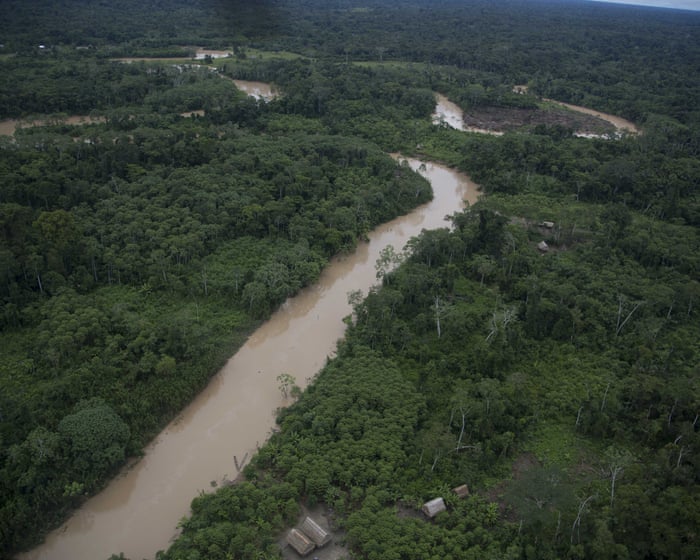
Giving £2 a day to people in the Amazon helps protect rainforest, pilot project finds
Researchers say almost 90% of participants in unconditional basic income scheme in Peru adopted environmentally beneficial practices A pioneering project to provide Indigenous people in the Peruvian Amazon with an unconditional basic income has contributed to the protection of th
World news | The Guardian ·

Entrepreneurs live longer than salaried workers, study reveals
Conventional wisdom suggests that the long hours and pressures of entrepreneurship can take a toll on health. But new research by Cristiano Bellavitis, associate professor in the School of Business at Stevens Institute of Technology, and his collaborators finds that entrepreneurs
Phys.org - latest science and technology news stories ·

Quantum interference traps electron waves in metal for first time
Ever since quantum mechanics first described particles, like electrons, as rippling waves, researchers have wondered if those waves could be trapped in place. Writing today in Science a century later, a team of Columbia University researchers reports waves of electrons becoming t
Phys.org - latest science and technology news stories ·

Global warming may have halted an emerging ice age, study suggests
Two thousand years ago, the Arctic remnants of a once-vast ice sheet started to grow again. It was the beginning of a new glacial period, more conversationally known as the next ice age—but by the 1960s, summer temperatures were already so high that the ice sheet started to shrin
Phys.org - latest science and technology news stories ·

Earth's hemispheres may have worked together to drive past ice ages
New research from the University of St Andrews has uncovered a previously unknown process that may have helped drive Earth into past ice ages. Published today (Oct. 22) in the Journal of Climate, the paper links ice sheets in the Northern Hemisphere to changes in ocean circulatio
Phys.org - latest science and technology news stories ·