科学与环境
Deep-sea mollusk houses bacteria in tiny 'dragon balls,' revealing a new symbiotic structure
来源: Phys.org - latest science and technology news stories · 发布于

Researchers at The Hong Kong University of Science and Technology (HKUST) have discovered a previously unknown specialized organelle structure in a deep-sea mollusk living at cold seeps in the South China Sea. Dedicated to maintaining bacterial symbiosis, this newly identified su
Researchers at The Hong Kong University of Science and Technology (HKUST) have discovered a previously unknown specialized organelle structure in a deep-sea mollusk living at cold seeps in the South China Sea. Dedicated to maintaining bacterial symbiosis, this newly identified survival mechanism provides new insights into how deep-sea organisms adapt to nearly oxygen-free environments and opens new directions for research on chemosymbiosis, organelle evolution and deep-sea ecosystems.
相关报道

From remedy to prevention: Researchers call for proactive approach to protect the human right to water
More than 2 billion people, or approximately one-quarter of the world's population, lack access to safe water, sanitation and hygiene, according to the United Nations Children's Fund. Today, 16 years after the U.N. General Assembly recognized this access as a fundamental human ri
Phys.org - latest science and technology news stories ·

Misunderstandings about statistics common even among experienced researchers
Even researchers and people with extensive training in statistics often find it difficult to interpret statistical results correctly. This is shown by a new systematic review carried out by Uppsala University and others, in which researchers have analyzed 55 studies involving ove
Phys.org - latest science and technology news stories ·
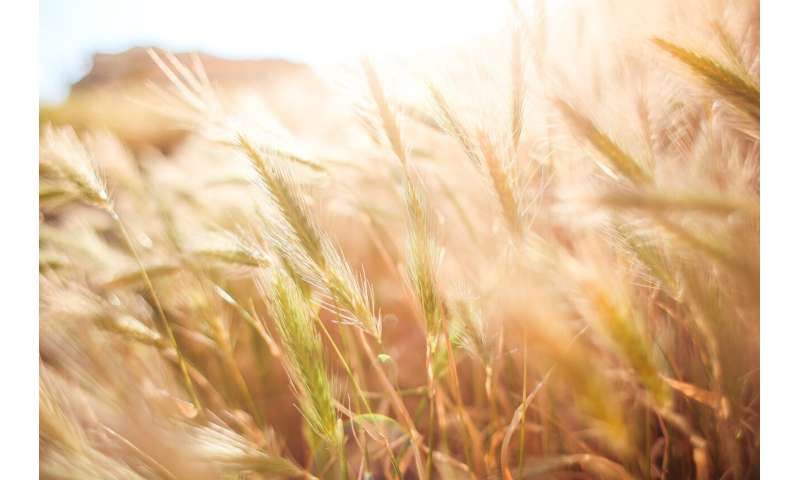
3D protein complex model sheds light on barley grain dormancy
Researchers from Adelaide University and Plant Synthetic Biology Australia have uncovered new insights into the molecular machinery controlling the dormancy-to-germination transition in barley, potentially paving the way for improved crop varieties and better outcomes for farmers
Phys.org - latest science and technology news stories ·
Why heart attacks can still happen even when bad cholesterol is low
Even when bad cholesterol is brought down to healthy levels, some people remain at risk of heart attacks, and scientists may have discovered why. Researchers identified two types of fat-carrying particles that appear to promote inflammation and damage blood vessels through mechan
All Top News -- ScienceDaily ·