体育与实时比分
Original Editorial
Dakar 2027 leaves Saudi Arabia: rally moves after seven years in the Kingdom
来源: Pulse Wire · 发布于
Organisers Amaury Sport Organisation announced on 25 October that Dakar Rally 2027, scheduled for 1–15 January, will not be held in Saudi Arabia, with a new location to be announced and a return planned for the 50th edition in 2028.
The Dakar Rally is leaving Saudi Arabia. Organisers Amaury Sport Organisation (A.S.O.) announced on Sunday 25 October 2026 that the 2027 edition of the world's most famous endurance rally, scheduled from 1 to 15 January 2027, will not be held in the Kingdom, ending a seven-year residency that began in 2020. The event will still go ahead, in a different territory to be announced in the coming days, and the rally will return to Saudi Arabia for its landmark 50th edition in 2028.
The joint statement from A.S.O. and the Saudi Motorsport Company was terse: "Dakar Saudi Arabia 2027, scheduled from 1 to 15 January, 2027, will not be held in the Kingdom, following recent developments in the region." The decision, the organisers said, "is exceptional and one-off", taken in close coordination with the Saudi Automobile and Motorcycle Federation and with the support of motorsport's governing bodies, the FIA and the FIM.
A pattern, not an isolated decision
Saudi sport under pressure
The Dakar is the latest — and biggest — sports event in Saudi Arabia to be disrupted amid attacks by Yemen's Iran-aligned Houthis. Golf's Asian Tour postponed the Saudi International indefinitely. Cycling's Urban World Championships was cancelled earlier in October. The tennis tournament Six Kings Slam was postponed to December. The World Rally Championship also dropped Saudi Arabia from its calendar. Taken together, the cancellations describe a sporting calendar under sustained strain from a regional security crisis, not a single event's bad luck.
The context is the wider Middle East security situation following the US-Israel war on Iran, with Houthi missile and drone attacks reaching into the Kingdom. Organisers cited regional developments but did not provide further details about the specific factors behind the decision — the standard, careful language of a body that must protect competitors, teams, sponsors and a host nation simultaneously.
Seven years in the desert
Saudi Arabia has hosted seven consecutive editions of the Dakar since 2020, with routes showcasing the country's varied terrain, from the dunes of the Empty Quarter to rocky canyons and Red Sea coastline. Before the Saudi era, the rally was run in South America from 2009 to 2019, after the original route from Paris, France to Dakar, Senegal — run from 1979 to 2007 — was abandoned due to ongoing political strife in North Africa. The Dakar has therefore moved before, and survived: relocation is part of its history, not a break with it.
Reuters reported on Wednesday, before the official announcement, that the 2027 rally would take place in Africa, citing sources involved in the World Rally-Raid Championship. If confirmed, that would be a symbolic homecoming for an event named after Senegal's capital but not run on African soil since 2007.
What the move means
For the competitors
For teams and drivers, the relocation is a logistical earthquake arriving less than ten weeks before the scheduled start. A.S.O. said it was in direct contact with competitors, teams and partners to support them through the transition. Vehicles, support trucks, spare parts, service crews and media operations for one of motorsport's largest travelling operations must all be rerouted to a new country, with new permits, new liaison arrangements and a new route book — a task measured in weeks under normal circumstances, and far harder under uncertainty.
Defending champion Nasser Al Attiyah of Qatar, who annexed his sixth Dakar crown in the dunes of Saudi Arabia in January 2026 and brought his career tally of stage wins to 50 on the last day of that rally, will defend his title wherever the race is run. But the character of the race — the dunes, the navigation, the attrition — depends heavily on terrain, and a new territory means a new kind of Dakar.
For Saudi Arabia's sporting project
For Saudi Arabia, the loss of the 2027 Dakar is a visible dent in a sporting strategy built on hosting the world's biggest events. The organisers' promise of a return for the 50th edition in 2028, with preparations already underway to make the milestone event significant for both the competition and the Kingdom, is designed to contain the damage: this is a pause, not a divorce. Whether the sporting world reads it that way will depend on whether the regional security situation stabilises, and whether other events follow the Dakar out of the Kingdom in the meantime.
What to watch
The announcement to watch next is the new location, promised in the coming days. An African route would reconnect the rally with its origins and its name; any other choice would signal how far organisers are willing to travel to find stable ground. Either way, the 2027 Dakar will be remembered as the edition that proved even the toughest race in motorsport cannot outrun geopolitics.
The economics of hosting the Dakar
What a rally is worth to a host
Hosting the Dakar is not just a sporting honour; it is a large logistical and commercial operation. Thousands of competitors, support staff, journalists and officials travel with the race, along with hundreds of race and assistance vehicles, helicopters and a mobile bivouac city that moves each day. Host countries gain global television exposure across two weeks in January — a quiet period in the sporting calendar — and the chance to showcase landscapes and infrastructure to an international audience. For Saudi Arabia, which has built a sporting strategy around hosting major events, the Dakar was a flagship: an event associated with adventure, endurance and spectacular terrain, staged across the Kingdom's deserts and coastlines.
That is why the organisers' language matters. Calling the decision "exceptional and one-off", and promising a return for the 50th edition in 2028, is an attempt to protect both the event's brand and the host's reputation. A.S.O. is not a small promoter: it also organises the Tour de France, and its relationships with host governments are long-term commercial partnerships. A permanent break with Saudi Arabia would damage both sides; a one-year relocation, framed as a response to circumstances beyond anyone's control, preserves the partnership for a milestone edition both sides want to celebrate.
The rally-raid calendar in flux
The Dakar is also the centrepiece of the World Rally-Raid Championship, and its move disrupts more than one race. Teams plan their seasons, budgets and vehicle development around the January Dakar; a change of continent changes everything from shipping schedules to tyre choices to the type of navigation crews must prepare for. African terrain would favour different skills and machinery than the Saudi desert, and the championship's other rounds must now fit around a relocated centrepiece. For the sport as a whole, the 2027 edition will test whether rally-raid's biggest event can retain its identity — the toughest race in motorsport, where amateurs and factory teams share the same dunes — when the dunes themselves change. The Dakar has survived relocation before, from Africa to South America and then to the Middle East. Its history suggests the race is bigger than any single host. The 2027 edition will test whether that remains true in a region where sport, security and geopolitics are now impossible to separate.
Sources: Reuters (25 October 2026), RACER (25 October 2026), Deccan Herald (25 October 2026), A.S.O. official statement via Dakar Rally on X (25 October 2026).
Original editorial by Pulse Wire Editors. Sources cited in the article.
相关报道

Faster than F1: The extreme motorsport where women keep winning
Top Fuel drag racing is the only elite motorsport class where women frequently beat men to major titles.
feeds.bbci.co.uk ·
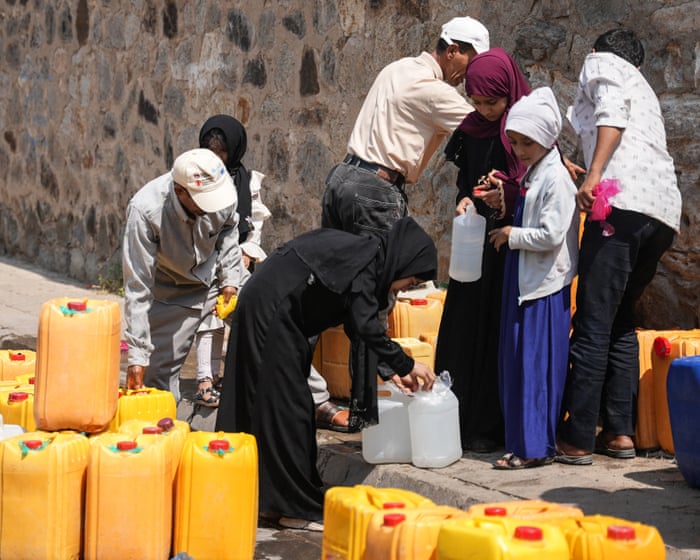
Houthis sending Taiz ‘back to the stone age’, governor of besieged Yemen city says
Oxygen, food and water supplies running low and massacres taking place, says Nabil Shamsan The Houthis are trying to send the city of Taiz back to the stone age, the city’s governor said in a briefing designed to urge the international community to do more to lift the month-long
World news | The Guardian ·
NFL to review additional allegations against Packers RB Jacobs
The NFL said it will look into additional allegations of physical and verbal abuse by Packers RB Josh Jacobs that were revealed as part of a public records release from the Hobart/Lawrence Police Department.
espn.com ·
Sources: Colts willing to trade Taylor, active in talks with multiple teams
The Colts now are open to trading Jonathan Taylor, sources told ESPN and NFL Network, and multiple teams have reached out to Indianapolis.
espn.com ·
Jeanie Buss accuses siblings of 'cloak and dagger' tactics in Lakers' family saga
Jeanie Buss accused her siblings of conspiring against her in court filings responding to her siblings' ongoing effort to sell their shares in the Lakers.
espn.com ·