Business & Economy
When AI is subject to less regulation than your fridge, something is startlingly wrong | Richard Hermer
Source: Business | The Guardian · Published
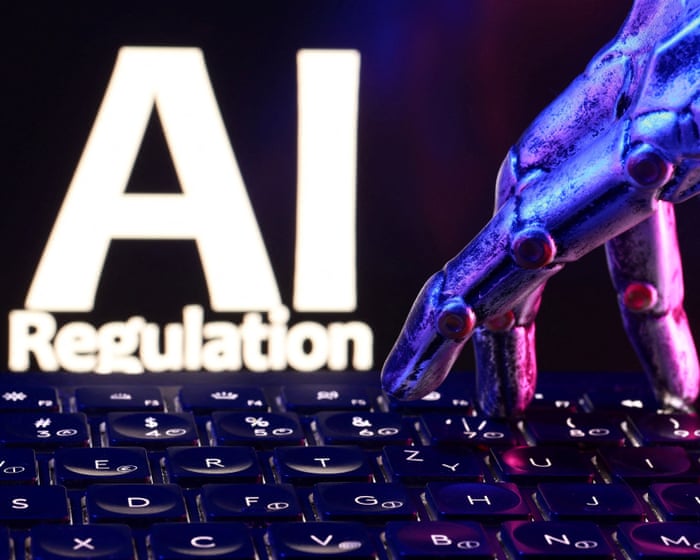
Let’s be clear: the risk to humanity is unprecedented. Without an urgent public debate and robust use of international law, we will lose control of the future In my two years as attorney general, I spent more time working on national security than any other issue. The range and g
Let’s be clear: the risk to humanity is unprecedented. Without an urgent public debate and robust use of international law, we will lose control of the future In my two years as attorney general, I spent more time working on national security than any other issue. The range and gravity of the threats posed to our nation are multifold, from terrorism, armed conflicts and nuclear proliferation, to the impacts of financial insecurity and the climate crisis.
All profound challenges, yet ones our superb intelligence and defence communities are well placed to counter. The risk from AI is of an altogether different magnitude, not only in scale, but also because there is a limited time window to address it. The risk is difficult to overestimate: it poses an existential risk to humanity.
The lights are flashing red and we must act now before it’s too late. Although the extraordinary threats posed by AI have long been flagged by those closely involved in its creation, it was not until very recently, after the disclosure of the Hugging Face hack and the resignation of Jacob Coxon from Anthropic , that the issue at last started to gain traction in the public discourse. This moment is an opportunity, and to capitalise on it we desperately need increased urgency in international coordination to regulate frontier AI.
There must also be meaningful public engagement with how AI should be shaped to benefit humanity, rather than entrench the power of a few. We cannot leave this to China, the US and big tech – we must all demand a voice in the debate. Continue reading...
Related stories

‘Halloweenmas’: how the spooky one-nighter turned into a month-long spectacular
Welcome to Halloweenmas, weeks of themed fun and gifts – from costume parties to decorating trees – without the stress, rules or cost of Christmas The tree is up, the wreath is hanging on the front door and you’ve just opened your advent calendar . All told, it’s beginning to fee
Business | The Guardian ·

Primordial helium further confirms our understanding of the Big Bang
In the early moments of the big bang, two elements were forged: hydrogen and helium. Technically, the tiniest traces of light elements such as lithium were produced as well, but nothing of consequence. The early universe was about three parts hydrogen to one part helium. All the
Phys.org - latest science and technology news stories ·
A new way to fight gum disease without wiping out good bacteria
Scientists discovered that disrupting the chemical messages bacteria use to communicate can push dental plaque toward a healthier microbial balance. The approach could lead to new treatments for gum disease that control harmful bacteria without destroying beneficial species.
All Top News -- ScienceDaily ·

Let’s stop doubting Thomas Tuchel: England are impressive and Euro 2028 is the target | Barney Ronay
Coming third in the World Cup was really not a disaster, and Saturday’s rout of Croatia and building the team around Jude Bellingham are good signs Move fast and fix things. It has been a fine week so far for Thomas Tuchel as he attempts the cyclical task of soldering together no
Sport | The Guardian ·
Trump rewards Putin and betrays Ukraine with Russia diesel deal - The Latest
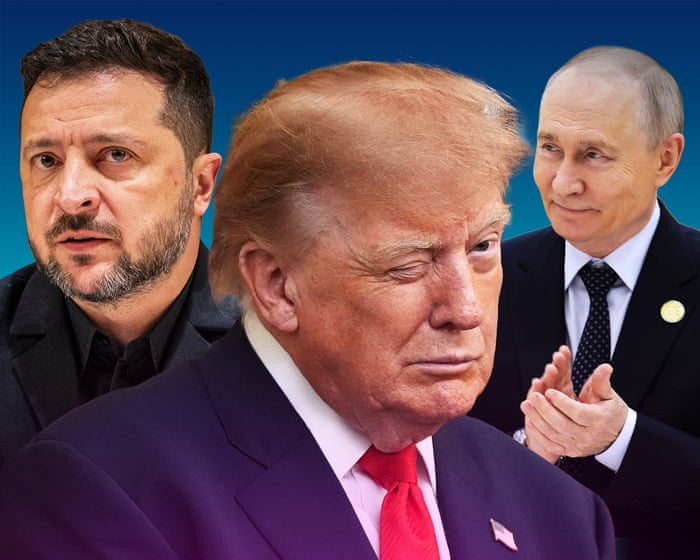
Donald Trump’s deal to buy Russian diesel has been met with fury from Volodymyr Zelenskyy, who said it was ‘a weak decision’ and would generate ‘billions’ in extra revenue for Putin’s war effort. The Ukrainian president has also rejected US calls for an ‘energy ceasefire’, which
Business | The Guardian ·