Technology & AI
Voyager 1 Beat the Odds and Is Still Working a Light-Day Away From Earth
Source: WIRED · Published

The spacecraft stores data on an eight-track tape, but it’s managed to stay in contact with scientists for decades. Now, it’s the first human-made object to travel a light-day away from Earth.
The spacecraft stores data on an eight-track tape, but it’s managed to stay in contact with scientists for decades. Now, it’s the first human-made object to travel a light-day away from Earth.
Related stories
NASA's Voyager 1 space probe is now one light-day away from Earth
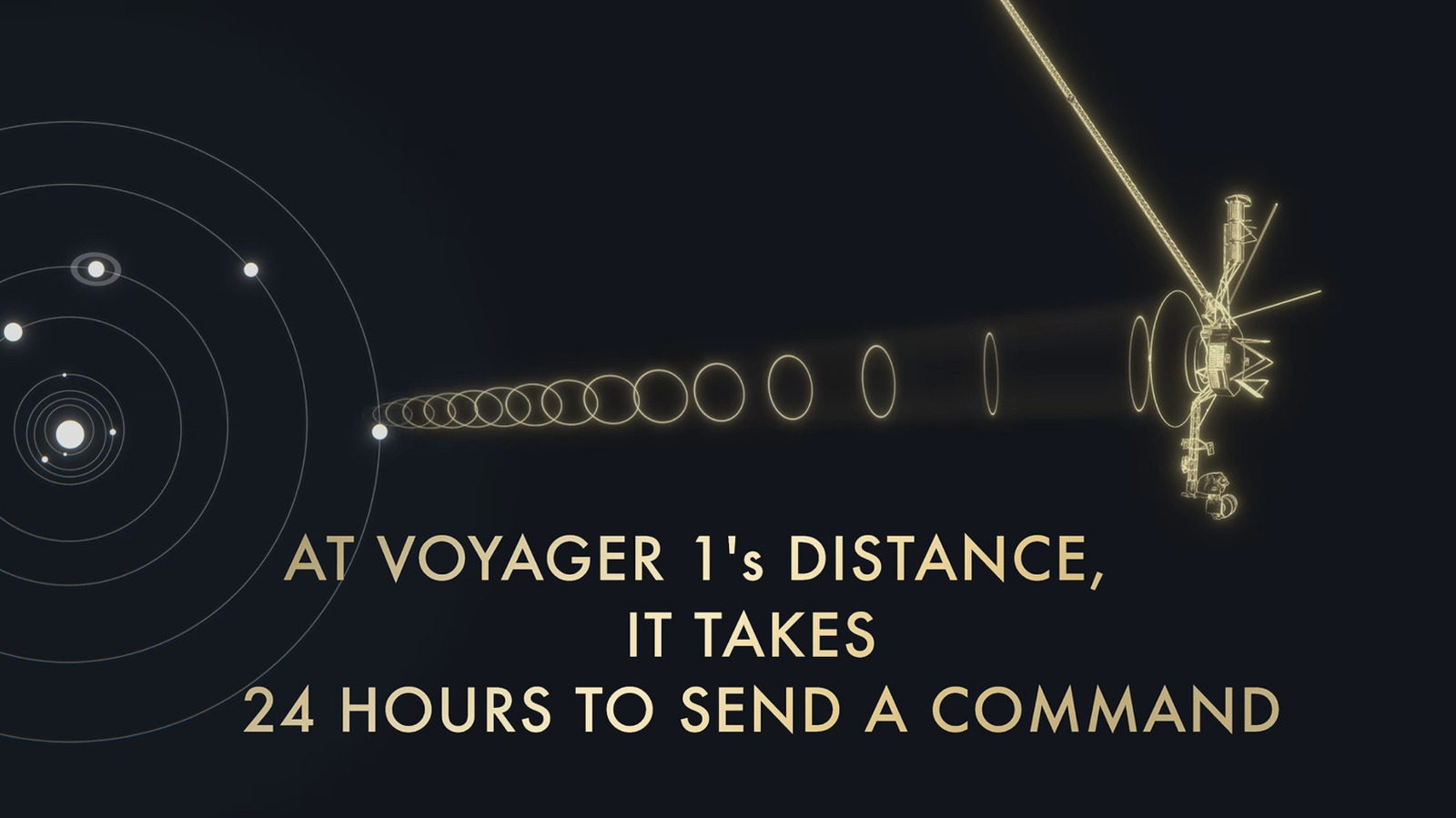
It now takes 24 hours to send a message to Voyager 1, as it reaches a distance that's one light-day away from our planet.
Engadget - Technology News & Expert Reviews ·

Children linked to religious sect raided by UK police now subject of care proceedings
Scale of cases in family court relating to Ahmadi Religion of Peace and Light ‘rarely seen before’, one lawyer said Scores of children linked to a religious sect raided by police over allegations of serious sexual offences and modern slavery are now the subject of care proceeding
World news | The Guardian ·

Nanogap architecture could help integrate quantum light sources onto chips
Quantum light sources that emit light with special quantum properties, such as single photons, are critical for quantum photonic technologies, including quantum communication, computing and sensing. In this regard, monolayer tungsten diselenide (WSe₂), a two-dimensional (2D) semi
Phys.org - latest science and technology news stories ·

The color of uniformity: Far-red light effects on plant growth
Ever wandered through a field of plants and observed how their heights are relatively uniform? In nature, this is partly due to plants' ability to sense their neighbors through light receptors and shade-avoidance responses. When a lower ratio of red to far-red (FR) light is detec
Phys.org - latest science and technology news stories ·
A mysterious twist in the universe’s oldest light could reveal new physics
Scientists have spotted hints of a mysterious rotation in the universe’s oldest light that could reveal new physics and shed light on dark matter and dark energy. A new technique developed at UC San Diego could help rule out misleading telescope errors, bringing researchers close
All Top News -- ScienceDaily ·