Technology & AI
Think you can save the Hubble Space Telescope? NASA wants to know.
Source: Ars Technica - All content · Published
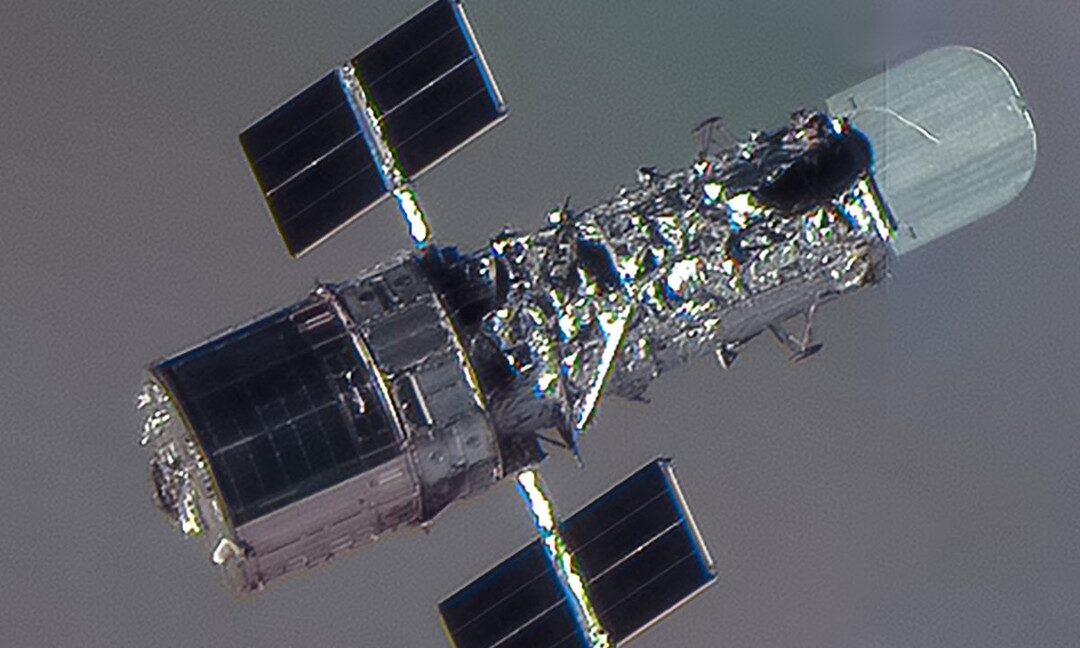
The Hubble Space Telescope still shines in the eyes of astronomers after 36 years in orbit, but it is not as nimble as it once was. Left alone, the observatory will plunge back into the atmosphere in the early-to-mid-2030s, closing the book on one of the most famous scientific in
The Hubble Space Telescope still shines in the eyes of astronomers after 36 years in orbit, but it is not as nimble as it once was. Left alone, the observatory will plunge back into the atmosphere in the early-to-mid-2030s, closing the book on one of the most famous scientific instruments of the century. NASA last raised the orbit of Hubble in 2002, when the Space Shuttle Columbia visited the observatory for a servicing mission.
The final shuttle servicing flight in 2009 did not reboost the telescope's orbit, and with the retirement of the shuttle fleet two years later, Hubble has steadily lost altitude with no way to stave off eventual destruction. The space agency released a Request For Information (RFI) on Thursday asking commercial companies for ideas on how to reboost, service, or a controlled disposal of Hubble. Responses are due November 30.
Specifically, NASA is looking for information about companies' current and near-term capabilities for capturing Hubble and boosting it to an altitude of at least 373 miles (600 km), enhancing the telescope's performance through, or guiding Hubble to a controlled reentry. Read full article Comments
Related stories
Hubble reveals a stunning twist in how the universe emerged from darkness
A surprising discovery by astronomers using the Hubble Space Telescope is challenging a leading explanation for how the early universe emerged from a dense fog of hydrogen roughly 13 billion years ago. Scientists once believed powerful winds from exploding stars helped radiation
All Top News -- ScienceDaily ·

Google’s satellite AI server transmits its first response to Earth
Google's AI chip-equipped satellite has generated its first response from space. In a blog post on Friday, Google says it successfully booted up the satellite's Tensor Processing Units (TPUs), allowing the on-board Gemma 4 model to follow through on a prompt to create a haiku abo
The Verge ·

Rocket Report: Winter is coming for Themis; Cowboy Space adds iron to the fire
Welcome to Edition 9.17 of the Rocket Report! It's been a while since an American company announced plans for a medium-lift new launch vehicle, but that's what happened this week when a startup named Cowboy Space revealed specs for its Big Iron rocket, named for the classic count
Ars Technica - All content ·

Survey reveals what students think about AI
College students say they use AI mostly for learning and don't use it to cut corners but think that their peers do, according to the inaugural Dartmouth AI Survey, a new multiyear survey on how AI is shaping students' learning and career readiness.
Phys.org - latest science and technology news stories ·

A decade of carbon dioxide data from space gets an upgrade
Every day, two NASA space instruments known as the Orbiting Carbon Observatory-2 and -3 (OCO-2 and OCO-3) capture more than a million observations of sunlight reflecting off Earth's surface. Using the physics of how light travels through the air, an algorithm converts these raw d
Phys.org - latest science and technology news stories ·