Business & Economy
The Guardian view on climate and debt: a vicious cycle the world must break at Cop31 | Editorial
Source: Business | The Guardian · Published
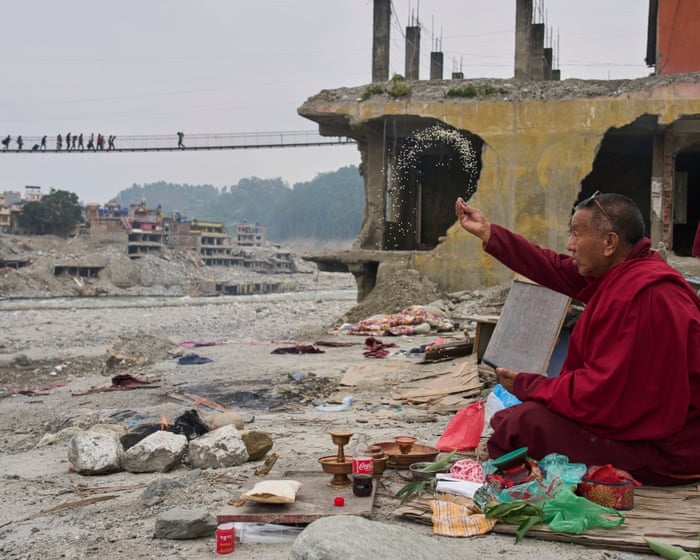
Poor countries are paying creditors instead of preparing for climate disasters. The international financial system must stop deepening their vulnerability The catastrophe that struck Nepal’s Himalayas in August began with a collapsing glacier. An avalanche of ice and rock unleash
Poor countries are paying creditors instead of preparing for climate disasters. The international financial system must stop deepening their vulnerability The catastrophe that struck Nepal’s Himalayas in August began with a collapsing glacier. An avalanche of ice and rock unleashed deadly floods, sweeping away villages, bridges and roads, and leaving thousands dead or missing.
It illustrated the dangers posed by global heating to the Himalayas’ increasingly unstable glaciers. Nepal lost a tenth of its electricity generation. Reconstruction will cost about $5bn.
Yet the Loss and Damage Fund, hailed as a historic breakthrough at the 2022 UN climate summit, has earmarked just $20m for Nepal – less than 5% of the $482m that Kathmandu must pay its external public creditors this year. “The scale of resources needs to increase,” Nepal’s delegation to this year’s UN climate conference drily observed. They are not the only ones agitating for change at Cop31.
In its September report, Debt Fuels the Climate Crisis , ActionAid noted that the global south’s external borrowing is 100 times more than the climate finance it received. Poor nations end up trapped in debt dependency because they export cheap raw materials, but import expensive food, fuel and manufactured goods, invariably priced in dollars. The charity warned that climate-vulnerable countries are now expected to fund decarbonisation while servicing dollar loans that often pressure them to export fossil fuels rather than invest in green industrialisation.
Continue reading...
Related stories

Climate change and habitat loss could fuel deadly bat-borne disease
Bats carry some of the world's deadliest viruses. Now, as climate change, extreme heat and habitat destruction intensify, so too could the risk of these diseases spreading to humans, according to new Adelaide University research.
Phys.org - latest science and technology news stories ·
Republicans could expedite bill to make big oil immune to lawsuits, warn experts
GOP lawmakers are rushing through high-priority bills before newly elected Democrats are sworn in Climate groups fear lawmakers could pass a bill by the end of the year that would give fossil fuel companies immunity from lawsuits and legislation that aims to hold them accountable
World news | The Guardian ·

The Guardian view on the Milburn report: a manifesto for youth participation | Editorial
This is not a rerun of failed welfare cuts, but young people who rely on benefits cannot be expected to take promised opportunities on trust The gap between the state’s investment in young people compared with older generations has more than doubled in two decades. At the same ti
Business | The Guardian ·
UK backs idea of new levies on polluting sectors to pay for climate action costs
Britain joins other signatories to statement urging introduction of targeted taxes on heavy emitters The UK has signed a statement that backs levies on polluting sectors to pay for the impacts of the climate crisis, in a strong political signal that could pave the way for frequen
Business | The Guardian ·

Nepal Came to COP31 in Dire Need. It’s a Test for the World.
A deadly glacier collapse left the country with $5 billion in recovery costs. So far, few have stepped up with aid.
NYT > World News ·