Technology & AI
Original Editorial
Starlink restored in Ukraine — and Musk admits SpaceX throttled it
Source: Pulse Wire · Published
Starlink and Starshield speeds returned to normal in Ukraine on 24 October after more than a week of restrictions, as Elon Musk said SpaceX deliberately limited commercial Starlink over alleged offensive drone use.
Starlink is working normally again in Ukraine. On Saturday 24 October 2026, President Volodymyr Zelenskyy said on Telegram that Starlink and Starshield had resumed operations at their pre-restriction speeds, ending more than a week of disruption that had hampered the Ukrainian military's drone operations and its ability to intercept Russian attack drones. Ukraine's defence ministry said its monitoring systems had recorded stable connections at speeds exceeding 400 km/h.
The restoration closed one of the strangest episodes of the war: a period in which one of Ukraine's most critical military systems was degraded, nobody would say who had degraded it, and the man who controls it eventually admitted that he had — while insisting he was right to do so.
Ten days of throttling
The 100 mph ceiling
The restrictions were first reported on 14 October. For around ten days, Ukrainian drones flying faster than about 100 miles per hour (160 km/h) lost their satellite connection. The military lost control of some drones, while others became more vulnerable because they were flying more slowly. Ukrainian officials said the restrictions hampered the military's ability to intercept Russia's increasingly fast attack drones and forced the cancellation of some operations.
The affected systems were twofold. Starlink is SpaceX's commercial satellite internet service, widely used by Ukrainian units. Starshield is the military-grade version of the system, operated using Starlink technology and controlled by the United States government. Both were affected, and the distinction between them would become central to the dispute over responsibility.
Conflicting accounts
For days, neither Musk nor the US government took responsibility for imposing the curbs. The Wall Street Journal reported that Musk had ordered SpaceX to throttle Ukraine's Starlink access, though some sources claimed he had discussed it with the Trump administration first. The Journal also reported that President Donald Trump called Musk on Wednesday and asked him to restore Starshield service. Trump would not confirm whether he made the call, saying only: "The bottom line — he put it back."
Ukraine's defence minister told reporters that Starshield appeared to be working normally again, although the military was still conducting tests and had not received an explanation for the restrictions. Zelenskyy said the speeds had started returning to normal overnight. One source in the Donetsk region still saw the old limit on Saturday morning, according to CNN, a reminder that restoration across a war zone is rarely instantaneous or uniform.
Musk's admission — and his justification
"That loophole was closed"
Hours after Kyiv announced the restoration, Musk changed his public account. He had earlier denied deliberately throttling Ukraine's connection, the BBC reported. On 24 October he wrote on X: "Ukraine military violated Starlink terms of service and used it for offensive drone strikes to kill people. That loophole was closed last week." In the same post he wrote: "Using Starlink, a civilian commercial service, for offensive drone strikes to kill people has never been allowed, nor should it be." He added that Starshield is a different system, controlled by the US government, and that what it decides to do is up to it.
Musk went further in a later post, writing that Starlink "can be used for infrastructure that is military, but it cannot be used for unequivocally offensive strikes that make it fair game to be struck back." He also wrote: "Were Starlink to be turned off, the Ukrainian front line would collapse immediately. This is NOT a threat, it is simply a statement of fact." Both Trump and Musk have criticised Zelenskyy, with Musk recently posting: "Zelensky has gone too far."
Kyiv's rebuttal
Ukrainian officials disputed Musk's account. Presidential adviser Serhiy Beskrestnov said on the Telegram app that the country is "physically unable" to use Starlink for long- and medium-range attack drone operations, and Ukrainian officials said commercial Starlink does not work over Russia, making the alleged misuse impossible in the form Musk described. Ukraine's general staff and defence ministry did not immediately comment on Musk's statement.
The dispute matters because it goes to the heart of how the war is fought. A single private company's network carries a large share of Ukraine's battlefield communications, drone operations and air-defence coordination. When that network is degraded — for whatever reason, by whomever — the effects are immediate and military, not commercial.
What to watch
The sovereignty question
The episode has already drawn sharp international criticism. On 23 October, Canadian Prime Minister Mark Carney said the Starshield cutoff caused Ukrainian deaths, as Ottawa leaned on its own Telesat Lightspeed network. The remark points to the deeper consequence of the throttling affair: allies and partners now have a concrete reason to accelerate alternatives to a system controlled by one man whose political views and business interests do not always align with Kyiv's needs.
There is also a timing question that has not been answered. Starshield's problems occurred after Trump announced a deal to buy Russian diesel while pressing Kyiv to stop striking Russian oil refineries. Whether those events are connected is unproven, and Musk's explanation — a terms-of-service enforcement action against offensive drone use — is a different account entirely. What is certain is that the restoration, however welcome, leaves the underlying vulnerability untouched: Ukraine's front line still runs, in large part, through a network that can be slowed, restricted or switched off by decisions taken in California and Washington rather than in Kyiv.
A pattern of leverage
Not the first Starlink row
The October throttling was not the first time Starlink's role in the war has become a political flashpoint. Since SpaceX provided terminals to Ukraine early in the full-scale invasion, the network has been indispensable to Ukrainian communications — and its owner has repeatedly used that indispensability as leverage in public arguments about the war's conduct, including a widely reported 2022 incident in which Musk declined to extend coverage for a Ukrainian operation near Crimea. Each episode follows a similar shape: a technical decision with military consequences, a public justification framed in terms of principles or terms of service, and a furious debate about whether a private citizen should hold this much power over a nation's defence.
What changed in October 2026 is the clarity of the admission. Musk's earlier denial, followed by his statement that SpaceX deliberately closed a "loophole", removes the ambiguity that had surrounded the restrictions. It also sharpens the policy question for Ukraine and its allies: how do you plan a war around infrastructure whose owner can throttle it, and then explain the throttling as enforcement of a commercial contract?
The search for alternatives
Part of the answer is already being built. Canada's Telesat Lightspeed network was cited by Prime Minister Carney as Ottawa leaned on it during the cutoff, and Europe has been developing its own secure satellite constellation, IRIS², precisely to reduce dependence on non-European providers for critical communications. None of these alternatives yet matches Starlink's scale, coverage and battlefield maturity — which is why Kyiv's immediate priority was restoration, not replacement. But every throttling episode strengthens the political case for them, and weakens the argument that dependence on a single commercial network is a tolerable risk. The October affair will be remembered less for the ten days of degraded speeds than for the lesson both sides drew from them: Kyiv, that it needs a second network; and everyone watching, that the infrastructure of modern war is now, in part, privately owned.
Sources: TechCrunch (24 October 2026), Reuters (24 October 2026), Associated Press via PBS NewsHour (24 October 2026), Times Now (25 October 2026), Wall Street Journal reporting via TechCrunch.
Original editorial by Pulse Wire Editors. Sources cited in the article.
Related stories

Musk says SpaceX restricted Ukraine's Starlink connection as service restored
The tech billionaire accuses Ukraine of violating its terms of service by using the network for military activity.
feeds.bbci.co.uk ·
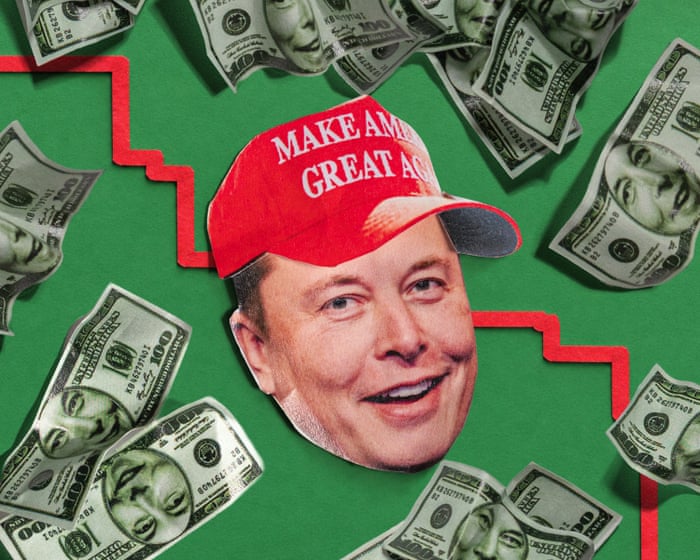
The staggering $446m Elon Musk has spent on the US midterms – visualized
The tech mogul’s midterm donations backing Republicans have made him the largest single-cycle political donor in modern US history Elon Musk has poured so much money into US politics this midterms election cycle that his donations could fund half a dozen SpaceX rocket launches or
Business | The Guardian ·

Why is Elon Musk plotting a mega-merger of SpaceX and Tesla?
Musk says there's "a lot to be gained" by combining the firms in what would be the biggest merger in history.
feeds.bbci.co.uk ·

Elon Musk is a 'real genius', Putin says after satellite talks with SpaceX boss
The Russian President praised Musk and said they are in "close" contact.
feeds.bbci.co.uk ·
Turkiye’s Erdogan urges Russia and Ukraine to stop Black Sea attacks
Turkish president hosts Zelenskyy in Istanbul as the two leaders agree to work on a new Black Sea grain corridor.
Al Jazeera – Breaking News, World News and Video from Al Jazeera ·