Technology & AI
Researcher plants 2m canaries into the AI supply chain. A privacy disaster surfaced.
Source: Ars Technica · Published
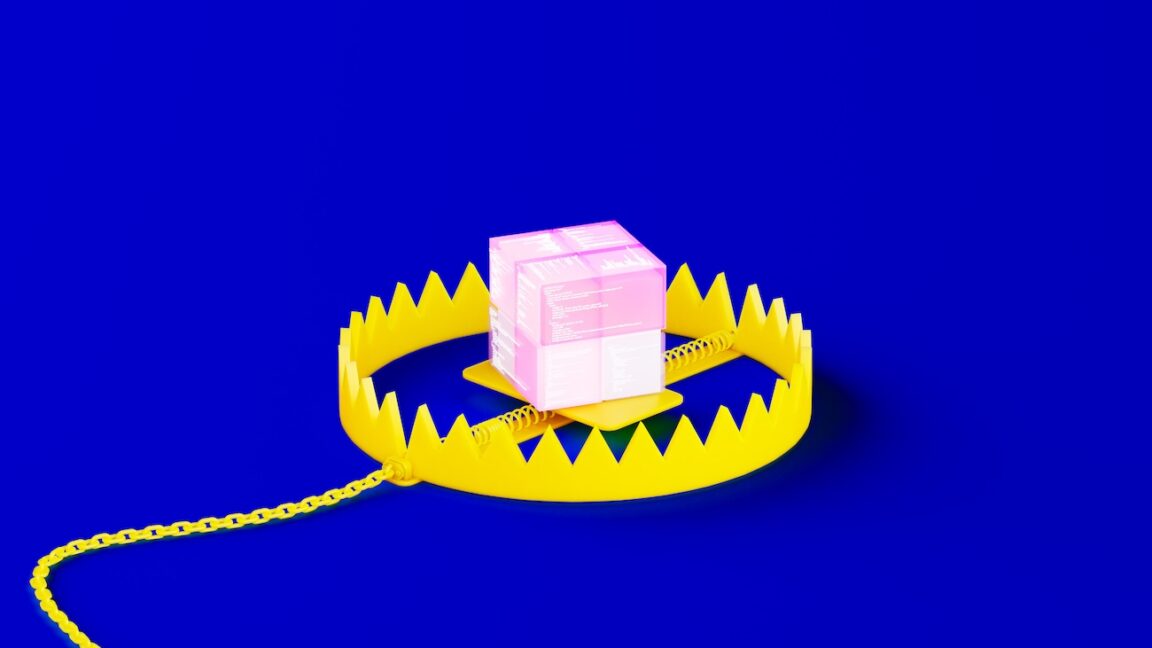
Researchers planted 2 million digital tripwires in requests sent through a sprawling network of AI services to find out what happened to sensitive information entrusted to them. What they discovered was an ecosystem that leaked highly sensitive data like a sieve. The exposure was
Researchers planted 2 million digital tripwires in requests sent through a sprawling network of AI services to find out what happened to sensitive information entrusted to them. What they discovered was an ecosystem that leaked highly sensitive data like a sieve. The exposure was found through an ingenious experiment designed to test if sensitive information can leak through the vast chain of widely used AI services and how that information is exploited when it does.
Many of today’s AI apps use services such as OpenRouter or Vercel that act as brokers. These “AI routers,” sometimes also known as “AI gateways,” receive large numbers of prompts sent from AI app end users and route them to an available inference engine based on criteria such as the one charging the lowest price or being best suited for the given task. Instead of using Anthropic, OpenAI, or another big provider, the developer hires an AI router to find the most suitable model.
Security breaches, prompt theft, and privacy violations To test for potential leakage, researcher HD Moore assembled a collection of AWS access keys, functioning credentials tied to empty AWS accounts, passwords for services such as SSH, and unique URLs, DNS names, and private git repository references. None of the secrets had ever been used before, and he controlled the infrastructure that received any requests using the credentials. He then seeded each secret into exactly one prompt sent to a single provider.
In the event any of the secrets were leaked, these “canaries”—so called because they resemble the role of that bird when taken into coal mines—would allow Moore to identify each link in the chain that was responsible. Read full article Comments
Related stories
"You’re right"—LLMs will get climate info wrong if you ask
Many studies over the years have examined how people encounter climate science information. Some focused on the top results that Google surfaced (back when Google was still in the business of serving links), while others examined social media content or newspaper and TV news cove
Ars Technica ·

Record-setting X-ray laser reliably generates flashes with wavelengths shorter than distances between atoms
Researchers from DESY and European XFEL have demonstrated reliable production and transport of X-ray laser flashes with a wavelength of about 0.04 nanometers (or a photon energy of 30,000 electronvolts) at European XFEL, raising their own world record. This means that the X-ray's
Phys.org - latest science and technology news stories ·

Digital imaging workshop aims to reveal secrets in medieval manuscripts
Researchers recently used multispectral imaging technology to try to uncover hidden information from medieval manuscripts at the Rare Book and Manuscript Library at the University of Illinois Urbana-Champaign. The library hosted a digital imaging workshop in early October that se
Phys.org - latest science and technology news stories ·

Deep Venture: A new class of ocean exploration vehicle developed
Researchers have a new capability for exploring some of the least understood regions of the ocean. Developed by Woods Hole Oceanographic Institution (WHOI) in collaboration with NASA's Jet Propulsion Laboratory (JPL) in Southern California, Deep Venture is a next-generation auton
Phys.org - latest science and technology news stories ·

Anthropic researcher says he and Claude proved the Riemann hypothesis, first posed in 1859
A researcher at AI company Anthropic said Friday that he had used the firm's Claude chatbot to prove the Riemann hypothesis, a problem that has eluded mathematicians for more than 160 years.
Phys.org - latest science and technology news stories ·