Science & Environment
Leviathan's sprawling stars challenge idea that dusty giants become compact galaxies
Source: Phys.org - latest science and technology news stories · Published

Astronomers using the James Webb Space Telescope (JWST) have confirmed a massive, dust-rich galaxy called Leviathan in the early universe. Seen when the universe was roughly 1.5 billion years old, the galaxy has its stars spread out rather than in a concentrated fashion. A paper,
Astronomers using the James Webb Space Telescope (JWST) have confirmed a massive, dust-rich galaxy called Leviathan in the early universe. Seen when the universe was roughly 1.5 billion years old, the galaxy has its stars spread out rather than in a concentrated fashion. A paper, describing its strange stellar distribution, was posted to the arXiv preprint server on Oct.
19.
Related stories

A tiny shift exposes a cold brown dwarf masquerading as an early galaxy
A faint red object spotted by the James Webb Space Telescope originally appeared to offer a possible glimpse of the universe's first galaxies. But images taken about 3½ years apart revealed a giveaway: The object, nicknamed Capotauro, had moved.
Phys.org - latest science and technology news stories ·
James Webb discovers a scorching lava planet with a “giant sunscreen”
A scorching lava planet 280 light-years away has surprised astronomers by apparently maintaining a thick atmosphere despite conditions that should have stripped it away billions of years ago. James Webb Space Telescope observations suggest that TOI-561 b reflects about 75% of inc
All Top News -- ScienceDaily ·
NASA's Hubble and Webb discover ancient worlds that remember their past
NASA’s Hubble and James Webb Space Telescopes have uncovered surprising clues about the solar system’s origins by studying 27 tiny, distant objects beyond Neptune. Scientists discovered that these ancient building blocks of planets have remained remarkably unchanged for billions
All Top News -- ScienceDaily ·
A mysterious star system just 16 light-years away may be hiding habitable planets
Astronomers have solved a 170-year-old planetary mystery in a nearby two-star system, discovering that a mysterious wobble was caused by stellar activity rather than a giant planet. Although Jupiter-sized worlds have been ruled out in key regions, smaller, potentially habitable p
All Top News -- ScienceDaily ·
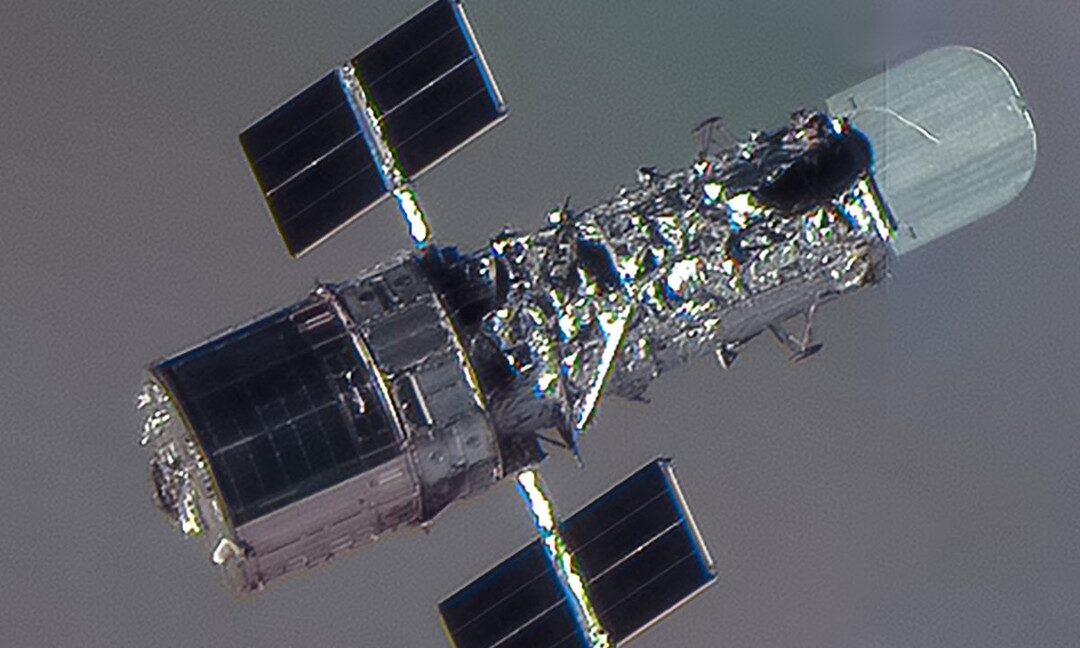
Once again, NASA is asking for ideas to rescue Hubble from certain death
The Hubble Space Telescope still shines in the eyes of astronomers after 36 years in orbit, but it is not as nimble as it once was. Left alone, the observatory will plunge back into the atmosphere in the early-to-mid-2030s, closing the book on one of the most famous scientific in
Ars Technica - All content ·