Science & Environment
Ice core records uncover widespread air pollution from early 20th-century copper production
Source: Phys.org - latest science and technology news stories · Published

About a century ago, the Anaconda Copper Mine complex near Butte, Montana, was emitting vast amounts of air pollution into the atmosphere. As small particles of arsenic and other heavy metals were carried by winds over the Arctic, storms eventually helped pull them to the ground,
About a century ago, the Anaconda Copper Mine complex near Butte, Montana, was emitting vast amounts of air pollution into the atmosphere. As small particles of arsenic and other heavy metals were carried by winds over the Arctic, storms eventually helped pull them to the ground, where they joined layers of history embedded in the ice.
Related stories
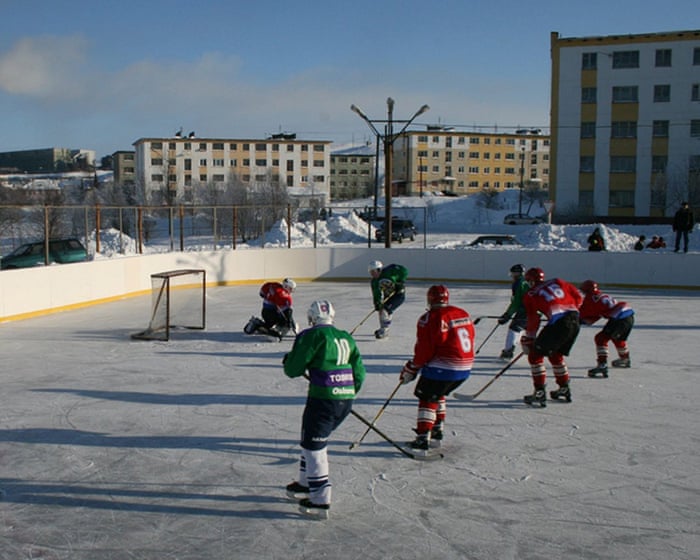
War has upended Russian-Nordic friendships forged on Arctic ice hockey rinks. Can they ever recover?
Ban on Russian teams competing internationally has been lifted but days of friendly relations between Norwegian, Finnish and Russia players are a distant – if fond – memory For years, playing ice hockey against teams from Russia was a central part of Janne Tervahauta’s social lif
Sport | The Guardian ·

Turkish province despairs at being Europe's plastic dump
At first glance, the canal near which Ibrahim Yildiz grazes his sheep in the southern Adana province appears idyllic, framed by rows of clementine trees—until the mountains of plastic shavings come into view.
Phys.org - latest science and technology news stories ·

Bloody spit: Ghana waste dump poses health, environmental 'crisis'
An acrid haze hung over a sprawling dump in Ghana's capital, Accra, as excavators gouged into mounds of smoldering garbage.
Phys.org - latest science and technology news stories ·

Quantum could solve AI energy drain, says tech founder
Quantum computers could curb the vast energy demands of artificial intelligence data centers with their ability to run complex calculations, one of the tech's pioneers told AFP.
Phys.org - latest science and technology news stories ·

Making metal–organic frameworks easier to shape for electronic devices
In 1974, the University of Melbourne's chemistry professor Richard Robson had the idea of replacing the wooden balls and metal rods used in structural models with molecules and chemical bonds. He began experimenting with copper ions linked by a four-armed organic molecule, creati
Phys.org - latest science and technology news stories ·