Science & Environment
Gravitational waves hint at black holes born from failed supernovae
Source: Phys.org - latest science and technology news stories · Published

When the most massive stars in the universe die, they often detonate in fiery supernovae, dramatically blasting most of their matter into space. The remaining stellar cores collapse into neutron stars and, sometimes, black holes. However, theories suggest that some massive stars
When the most massive stars in the universe die, they often detonate in fiery supernovae, dramatically blasting most of their matter into space. The remaining stellar cores collapse into neutron stars and, sometimes, black holes. However, theories suggest that some massive stars might die without a bang, instead directly collapsing inward to become neutron stars or black holes.
Related stories
Scientists just found a loophole that could let black holes split in two
Scientists have discovered a possible loophole in the laws that normally prevent black holes from splitting apart, suggesting that extremely fast-spinning black holes might divide into two. The surprising finding raises the possibility of an entirely new black hole phenomenon tha
All Top News -- ScienceDaily ·
Dead stars could break one of physics' most famous limits
A surprising new discovery suggests that some dead stars can grow far more massive than scientists once thought possible. Computer simulations show that powerful magnetic fields could allow white dwarfs to reach 2.4 times the mass of the Sun, dramatically exceeding a famous limit
All Top News -- ScienceDaily ·
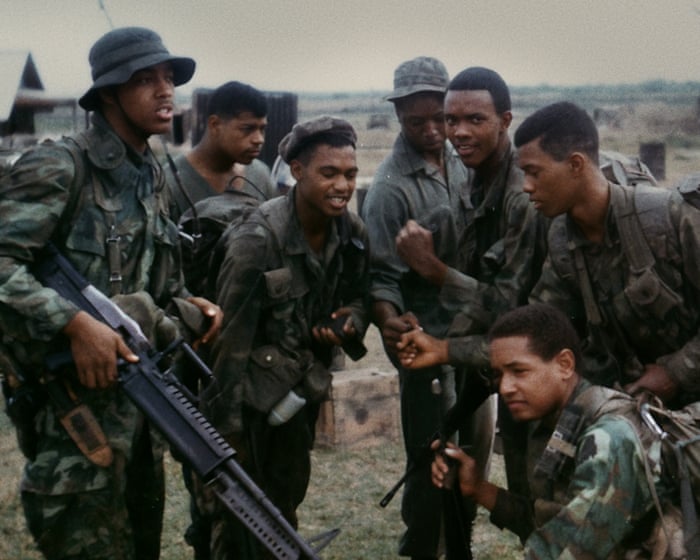
Soul Patrol review – heartstopping story of the US army’s first Black special ops team at work in Vietnam
Based on a 2003 memoir, this remarkable documentary shows the incredible bravery these young men showed in the face of battle and unrelenting bigotry Here is the remarkable story of the US army’s “Soul Patrol” unit in the Vietnam war: the all-Black Long-Range Reconnaissance Patro
Culture | The Guardian ·
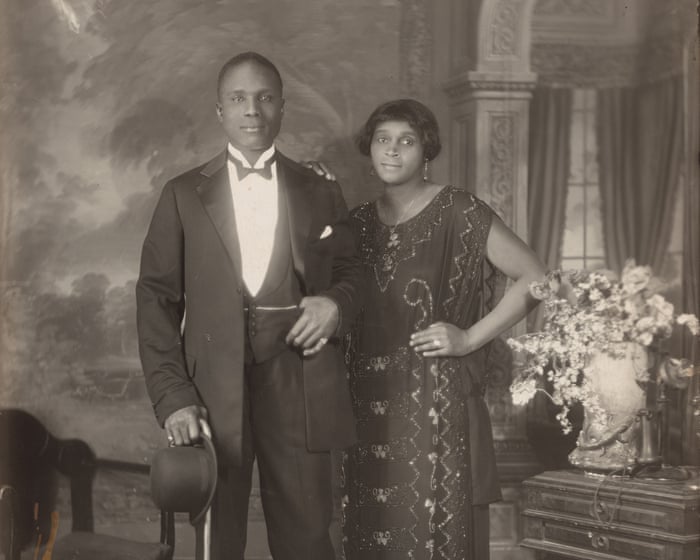
Identity, resilience and community: early Black portrait photography – in pictures
A new Washington DC exhibition aims to show how African Americans have used portrait photography to depict themselves, their communities, their aspirations and their identities. Titled Remember Me: Picturing African Americans in Early Photography , the exhibit at the National Gal
Culture | The Guardian ·

Protein-building RNA molecules reveal possible remnants of an ancestral genetic code
The genetic code determines the correspondence between genetic instructions and amino acids—the building blocks that form proteins. How this correspondence arose is one of the major open questions in evolutionary biology. A study led by Dr. Lluís Ribas de Pouplana, ICREA research
Phys.org - latest science and technology news stories ·