Science & Environment
Fossil footprints reveal how dinosaur ancestors gradually shifted from sprawling to upright walking
Source: Phys.org - latest science and technology news stories · Published

A research team led by Dr. Lorenzo Marchetti of the Museum für Naturkunde Berlin described the earliest archosauriform footprints (Pachychirotherium gardenaensis) from the GEOPARC Bletterbach—UNESCO World Heritage Dolomites, Italy.
A research team led by Dr. Lorenzo Marchetti of the Museum für Naturkunde Berlin described the earliest archosauriform footprints (Pachychirotherium gardenaensis) from the GEOPARC Bletterbach—UNESCO World Heritage Dolomites, Italy.
Related stories
A forgotten fossil reveals a fearsome dinosaur with giant claws
A 120-million-year-old fossil forgotten in a museum for nearly a century has revealed a terrifying new dinosaur that may have been more dangerous to humans than a T. rex. The tiger-sized predator also provides the first evidence of megaraptorans in Europe, helping explain how the
All Top News -- ScienceDaily ·
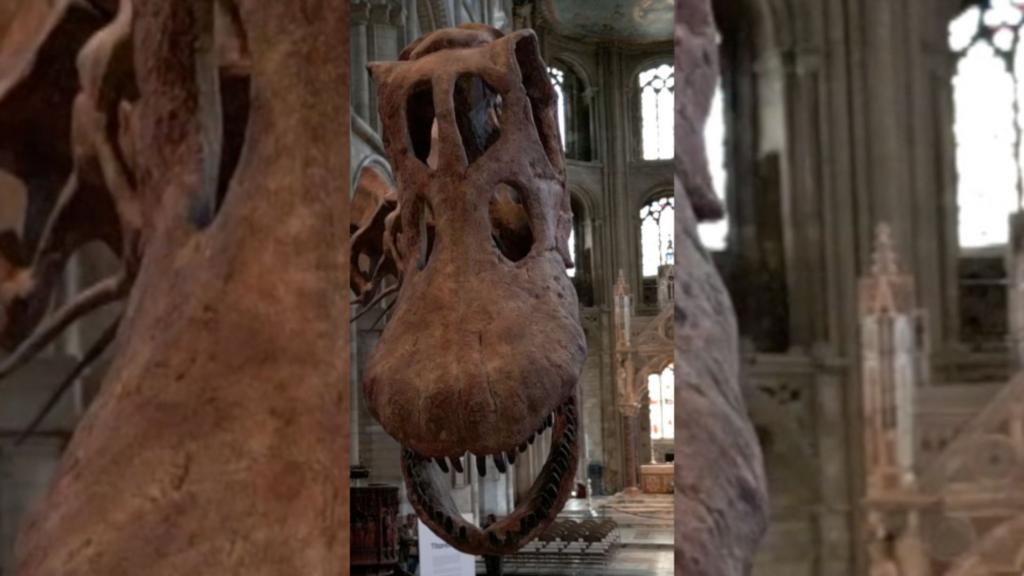
Fossil identified as first dinosaur ever found in Antarctica
Argentinian geologist Eduardo Olivero became the first scientist to find the remains of a dinosaur in Antarctica in 1986.
feeds.bbci.co.uk ·

Solving the mystery behind a flightless beetle's transatlantic journey
They can't fly or swim, so why do their closest relatives appear on different continents? Grey Gustafson, an associate professor in the Department of Biological Sciences, discovered through DNA sequencing that the ancestors of some of today's tiger beetles existed in South Americ
Phys.org - latest science and technology news stories ·

Two decades of publications reveal research institutions becoming more alike worldwide
Where researchers go, their knowledge goes. And that shapes where innovation happens. "Recruiting researchers is one way institutions gain new knowledge and steer their research in particular directions," explains Vito D. P. Servedio, senior scientist at CSH.
Phys.org - latest science and technology news stories ·

Fatal Neanderthal wound may be earliest evidence of a wooden spear attack on a human ancestor
A round hole in the shoulder blade (scapula) of a Neanderthal whose partial remains were unearthed in a cave in Iraqi Kurdistan may be the earliest known example of lethal interpersonal violence with a wooden spear in the hominin fossil record.
Phys.org - latest science and technology news stories ·