Science & Environment
Fear of giving too little can stop people from giving at all
Source: Phys.org - latest science and technology news stories · Published

We've all done it: convinced ourselves that if we can't donate enough money to a cause, it's better not to give at all. But new research led by Jean Zhang, now a postdoctoral researcher at the Wharton School, suggests we're setting the bar for generosity far too high.
We've all done it: convinced ourselves that if we can't donate enough money to a cause, it's better not to give at all. But new research led by Jean Zhang, now a postdoctoral researcher at the Wharton School, suggests we're setting the bar for generosity far too high.
Related stories
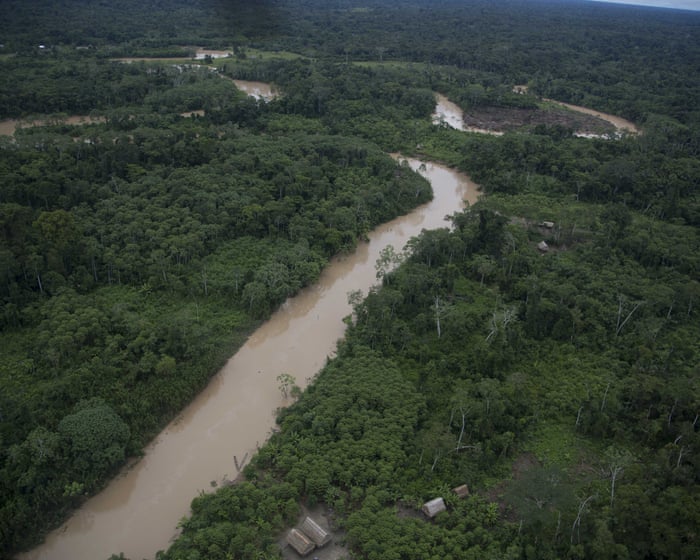
Giving £2 a day to people in the Amazon helps protect rainforest, pilot project finds
Researchers say almost 90% of participants in unconditional basic income scheme in Peru adopted environmentally beneficial practices A pioneering project to provide Indigenous people in the Peruvian Amazon with an unconditional basic income has contributed to the protection of th
World news | The Guardian ·

Earth's hemispheres may have worked together to drive past ice ages
New research from the University of St Andrews has uncovered a previously unknown process that may have helped drive Earth into past ice ages. Published today (Oct. 22) in the Journal of Climate, the paper links ice sheets in the Northern Hemisphere to changes in ocean circulatio
Phys.org - latest science and technology news stories ·

Webb captures stars in the early stages of life in a nearby stellar nursery
The NASA/ESA/CSA James Webb Space Telescope continues to reveal hidden parts of the cosmos with its advanced suite of infrared instruments. In a newly released image, Webb revealed many stars previously hidden by the dust clouds of NGC 7129, a stellar nursery about 3,300 light-ye
Phys.org - latest science and technology news stories ·

Webb image reveals young stars brewing in a nebulous cauldron
In this Picture of the Month from the NASA/ESA James Webb Space Telescope, we visit a turbulent cauldron of star formation to see what is brewing inside dense clumps of gas. This is a star-forming region named LHA 120-N 159, or simply N159, located 161,000 light-years away in the
Phys.org - latest science and technology news stories ·

Mosquito bites are more complicated than they appear—getting a closer look might lead to better disease prevention
Female mosquitoes need blood to produce eggs. While much research has focused on how these hungry mosquitoes find their targets, less is known about what happens after they land on skin. Yet, a better understanding may allow researchers to find new ways of preventing bites that t
Phys.org - latest science and technology news stories ·