Science & Environment
DNA nanoswitches find new drug leads faster by measuring protein interactions
Source: Phys.org - latest science and technology news stories · Published
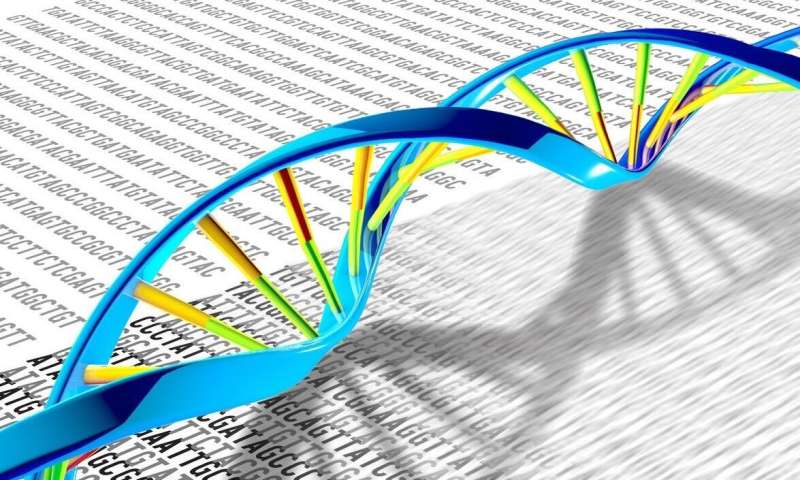
Researchers at the Wyss Institute at Harvard University, Boston Children's Hospital, and Harvard Medical School (HMS) have developed FIND, a drug discovery platform that searches large libraries for molecules that modulate binding interactions between two proteins. FIND uses DNA
Researchers at the Wyss Institute at Harvard University, Boston Children's Hospital, and Harvard Medical School (HMS) have developed FIND, a drug discovery platform that searches large libraries for molecules that modulate binding interactions between two proteins. FIND uses DNA nanoswitches to select drug candidates based on their effects on these protein-protein interactions, rather than simply whether they bind to a single target protein, giving it a key advantage over conventional binding-based screening.
Related stories

Researchers explore how AI could improve earthquake safety
Researchers at the University of East London (UEL) have developed a new framework for assessing earthquake risks, using AI-assisted technology to examine how soil conditions, ground shaking and structural strength influence a building's ability to withstand seismic activity.
Phys.org - latest science and technology news stories ·

Find out more here
Get the latest transfer news and gossip ahead of the new season
feeds.bbci.co.uk ·

Newly identified protein mechanism helps explain how cells respond to physical forces
A newly published study is changing our understanding of how the protein talin functions at sites where cells attach to their surroundings. The findings uncover a previously unknown mechanism by which mechanical force regulates talin, a key protein controlling cell adhesion and m
Phys.org - latest science and technology news stories ·

New microscopy method reveals tiny cell structures and their molecular surroundings
How do cells respond to drugs? A new microscopy technique could provide more precise answers to this question in the future. Researchers from Bielefeld University and the University of Vienna have developed a method as part of the European CHEM-SCAN project that makes the smalles
Phys.org - latest science and technology news stories ·

Researchers develop synergistic additives for scalable slot-die-coated perovskite photovoltaics
A research team led by Professor Yang Dong from the Dalian Institute of Chemical Physics (DICP) of the Chinese Academy of Sciences (CAS), in collaboration with Dalian Jiaotong University, has developed a synergistic additive strategy for large-area slot-die coating of methylammon
Phys.org - latest science and technology news stories ·