Science & Environment
Arctic sea ice hits another troubling low in 2026
Source: All Top News -- ScienceDaily · Published
Arctic sea ice is shrinking in both winter and summer, with satellite records revealing that the region's remaining ice is becoming thinner, younger, and more vulnerable to melting. Despite a recent slowdown in summer losses, scientists warn that the Arctic could experience a nea
Arctic sea ice is shrinking in both winter and summer, with satellite records revealing that the region's remaining ice is becoming thinner, younger, and more vulnerable to melting. Despite a recent slowdown in summer losses, scientists warn that the Arctic could experience a nearly ice-free summer before 2050.
Related stories

Super El Niño sets another record as it strengthens to 'unprecedented levels'
El Niño has continued to strengthen, with several key measures now in record territory. Simon King explores how it compares to previous events.
feeds.bbci.co.uk ·
Europe's new Sentinel-3C satellite just sent back spectacular images of Earth
Europe's Sentinel-3C satellite has returned breathtaking images of Earth just two weeks after launch, revealing the snowy Alps, frozen Arctic islands, and brilliant turquoise Caribbean waters. Its first measurements also show promising results for tracking rising seas, melting ic
All Top News -- ScienceDaily ·

Manchester City are suddenly box-office in age of charge-rage and mega defiance | Barney Ronay
This is by far the most interesting this club have ever been and they faced PSG, a kind of twin entity in all this as oil state glove puppets Another day, another note of unreality; another vivid and brilliant spectacle that feels as though it has been whipped together out of mer
Sport | The Guardian ·

Aboard an icebreaker, a writer got a closer look at the Arctic's 'Sea Change'
Sea Change. '/> As polar ice melts in the Arctic, shipping lanes are opening up, making the region a new zone of superpower competition. Writer Rana Foroohar explains the stakes in Sea Change.
NPR Topics: World ·
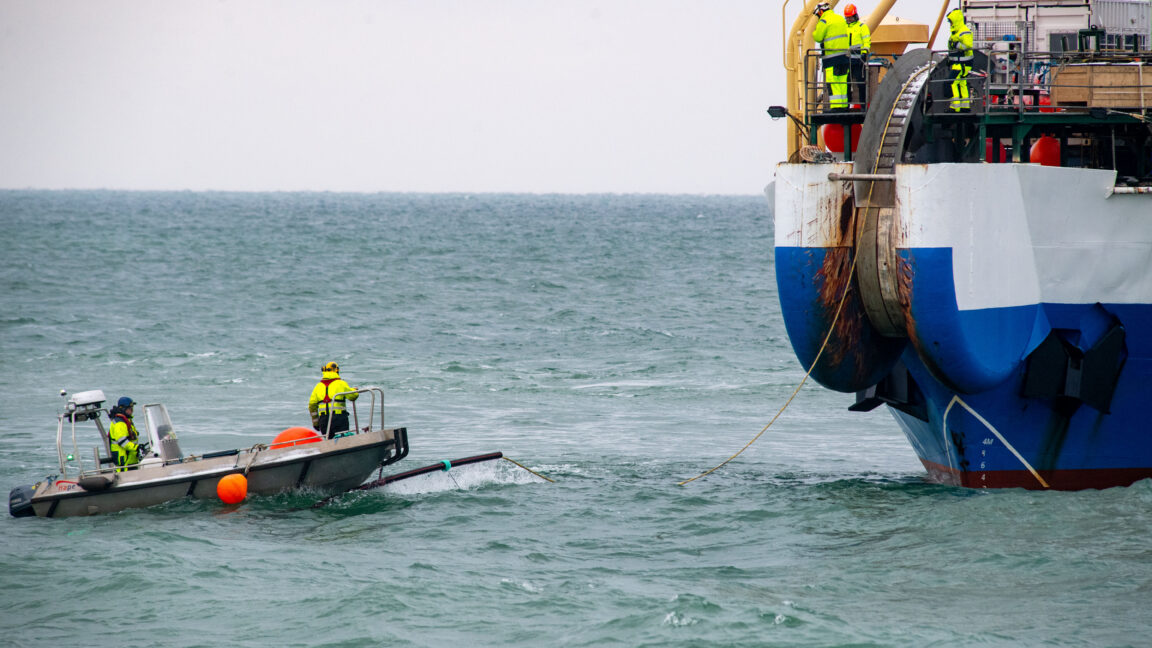
The Internet’s undersea backbone is slipping into the danger zone
Despite the expansion of Starlink and other communications satellite services, most of the world’s Internet traffic still travels through subsea cables crisscrossing the ocean floors. Those fiber-optic cables coexist with a network of oil and gas pipelines and submarine power cab
Ars Technica - All content ·