Culture & Entertainment
Abducted, renamed, but still here – the art of the first Native New Yorkers and their fight for their land
Source: Culture | The Guardian · Published
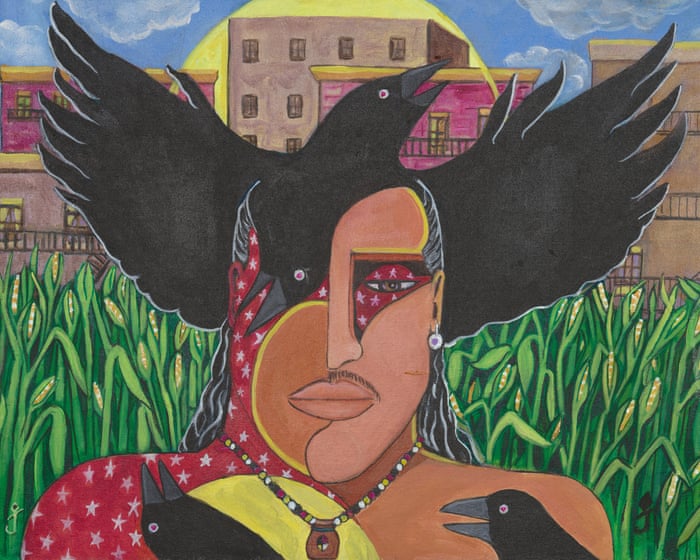
The US tried to forcibly assimilate the Lenape in brutal boarding schools, but a new exhibit proves their modern-day culture is vibrant and alive During the 19th century, the US government funded more than 500 “Indian boarding schools” aimed at forcibly assimilating Native Americ
The US tried to forcibly assimilate the Lenape in brutal boarding schools, but a new exhibit proves their modern-day culture is vibrant and alive During the 19th century, the US government funded more than 500 “Indian boarding schools” aimed at forcibly assimilating Native American children into western culture. Students were taken from their families, frequently by force, and forced to cut their hair. They were stripped of their original names, and taught to feel shame regarding their heritage and customs.
Run like military academies, these institutions required children to wear uniforms and subjected them to severe physical punishment, such as solitary confinement and flogging. Richard Henry Pratt, who established the first of these schools, declared that their explicit purpose was to “kill the Indian, save the man”. These assimilation practices persisted for decades, during which numerous children endured physical and sexual abuse.
At least 1,000 children lost their lives , though the actual casualty count is believed to be significantly higher. The US government issued no formal apology for these atrocities until 2024, when former president Joe Biden described the boarding school system as “one of the most horrific chapters in American history”. Continue reading...
Related stories
Children at risk for depression get “stuck” on sad faces
Depression may change which emotional faces children notice most, but the pattern appears to depend on family history. Children at higher familial risk became increasingly focused on sad faces, while lower-risk children with rising symptoms paid less attention to happy ones.
All Top News -- ScienceDaily ·

From Nagaland to a path to the Oscars: Indian film brings a rarely seen world to global cinema
After a major win at Toronto, Angh, a film from northeastern India, is now on a path towards the Oscars.
feeds.bbci.co.uk ·

The volunteers baking birthday cakes for children
The Hampshire group says it has seen a rise in demand and it needs more volunteer bakers.
feeds.bbci.co.uk ·

'He will never walk free': Indian judge's letter promises child sex abuse survivor
In the emotional letter, the judge describes the survivor as "the bravest little girl this court has ever seen".
feeds.bbci.co.uk ·

How an alleged rape sent an Indian university into turmoil and emptied hostels
Police are trying to verify whether a female student was raped at Lovely Professional University (LPU).
feeds.bbci.co.uk ·