العلوم والبيئة
This 6-million-year-old whale may have had the most crooked face in mammal history
المصدر: All Top News -- ScienceDaily · نُشر
A bizarre whale that lived roughly 6 million years ago had a face so dramatically crooked that scientists believe it may have been the most asymmetrical of any mammal. Discovered in Peru, the extinct pygmy sperm whale Scaphokogia huachafo had an enormous downward-curving snout an
A bizarre whale that lived roughly 6 million years ago had a face so dramatically crooked that scientists believe it may have been the most asymmetrical of any mammal. Discovered in Peru, the extinct pygmy sperm whale Scaphokogia huachafo had an enormous downward-curving snout and a skull so distorted that researchers initially thought it had been damaged after death. Instead, its strange anatomy appears to have been an extraordinary evolutionary adaptation for hunting along the seafloor.
أخبار ذات صلة

Expert comment: UK roads are dangerous by design. Punishing bad drivers won't fix them
In 2025, 1.16 million people around the world were killed in road collisions. That's 3,178 deaths per day. Up to 50 million were injured.
Phys.org - latest science and technology news stories ·

A 115 million‑year‑old 'algae rebellion' in Portugal's sea cliffs pushes back evolutionary timeline
Quite a few scientific discoveries are a product of chance. You set out looking for one thing, but often end up finding something totally unexpected. In micropaleontology, the study of microscopic fossils, this is especially common. You never know what you're going to find until
Phys.org - latest science and technology news stories ·
This strange creature lived 309 million years ago, long before the dinosaurs
More than 300 million years ago, long before dinosaurs roamed Earth, the Chicago area was a steamy, swampy landscape teeming with bizarre creatures. Now, scientists at the Field Museum have identified a previously unrecognized species of ancient amphibian ancestor, revealing new
All Top News -- ScienceDaily ·
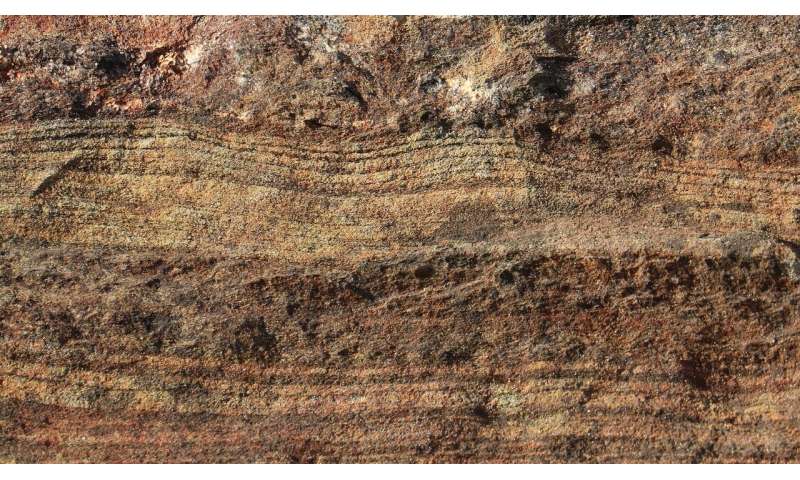
Damaged rocks may help explain why small earthquakes outnumber large ones
University of Michigan researchers have developed a better way to understand why earthquakes occur and what size they might be. Currently, models that predict earthquakes only account for slipping that occurs along a main fault, activity that usually generates large earthquakes.
Phys.org - latest science and technology news stories ·

Mourning Notcho: What one whale's death teaches us about ecological grief
Sighting a humpback whale from a boat can be awe-inspiring. For some BC Ferries passengers, that experience became disturbing when their ferry struck and fatally injured a humpback whale on Oct. 18.
Phys.org - latest science and technology news stories ·