التقنية والذكاء الاصطناعي
Software squeezes more data out of Webb Telescope for imaging exoplanets
المصدر: Ars Technica - All content · نُشر
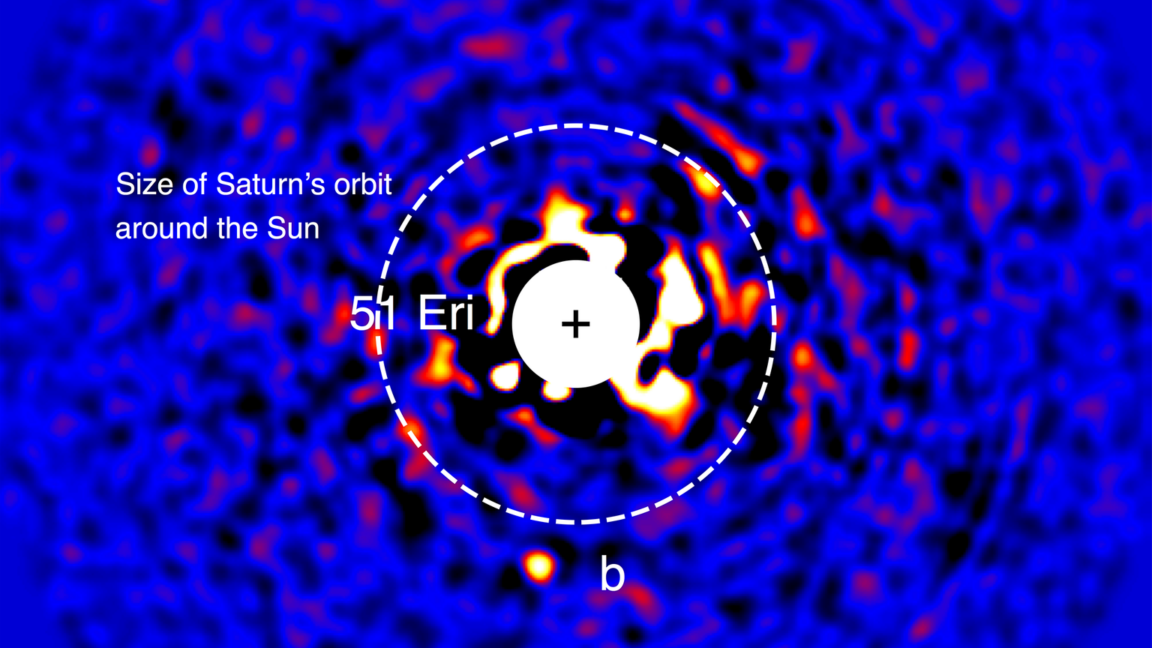
With a huge and still-growing catalog of exoplanets, researchers are anxious to take the next steps: trying to infer what conditions are like on them, either by imaging them directly or by capturing the light that has passed through their atmosphere. Both are substantial challeng
With a huge and still-growing catalog of exoplanets, researchers are anxious to take the next steps: trying to infer what conditions are like on them, either by imaging them directly or by capturing the light that has passed through their atmosphere. Both are substantial challenges, given the presence of stars that are far, far brighter than light that has come to us via the planet. While telescopes can be fitted with devices called coronagraphs that block out much of a star's light, there are limits to their effectiveness, caused by noise from subtle variations in the telescope's configuration and pointing between observations.
Now, researchers have developed a new software package that optimizes a physical model of the telescope in a way that allows us to better model these differences, producing low-noise imaging of exoplanets. Point spreads Central to this work is the concept of a point spread function. If you use a telescope to image a single point of light, it will not appear that way in the actual image.
Instead, it will be slightly blurry and spread out, due to imperfections in the telescope hardware and the limits of our ability to keep it pointed accurately through the time it takes to image something. The mathematical description of how a telescope distorts a point of light is called its point spread function. Read full article Comments
أخبار ذات صلة
NASA is racing against time to save the Hubble Space Telescope
NASA is exploring a daring plan to save the legendary Hubble Space Telescope from its eventual fiery plunge into Earth's atmosphere. After more than 35 years of groundbreaking discoveries, Hubble is slowly losing altitude, and without intervention, it could fall back to Earth as
All Top News -- ScienceDaily ·
Hubble reveals a stunning twist in how the universe emerged from darkness
A surprising discovery by astronomers using the Hubble Space Telescope is challenging a leading explanation for how the early universe emerged from a dense fog of hydrogen roughly 13 billion years ago. Scientists once believed powerful winds from exploding stars helped radiation
All Top News -- ScienceDaily ·

Ads in Chatbots Have Arrived. Here’s What’s Working—and What’s Not
As Anthropic maintains its vow to keep ads out of Claude, the rest of the AI chatbot industry is racing to win over advertisers without antagonizing users.
WIRED ·
Serve Robotics launches new business to become the AWS for robots
Serve Robotics announced alonsgside its third-quarter earnings that it will launch a new business line called Physical AI Services to offer customers its connectivity and data tools.
TechCrunch ·
Google is ditching Firebase Studio soon, and it wants you to use its newer AI tools instead
The company is going all-in on Antigravity and Google AI Studio and hopes developers will do the same.
Engadget - Technology News & Expert Reviews ·