التقنية والذكاء الاصطناعي
Seabirds racing home over the ocean can get jet-lagged
المصدر: Ars Technica - All content · نُشر
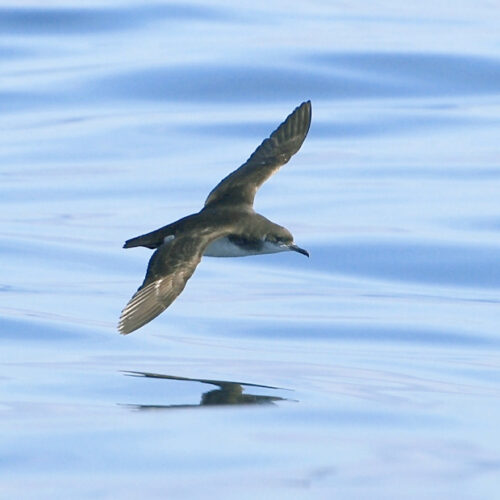
Flying across several time zones often causes jet lag, a feeling when the body insists it's the middle of the night while the clock says it's lunchtime. Now it turns out this nuisance is not exclusive to humans. A new Science study on Manx shearwaters, seabirds that can fly hundr
Flying across several time zones often causes jet lag, a feeling when the body insists it's the middle of the night while the clock says it's lunchtime. Now it turns out this nuisance is not exclusive to humans. A new Science study on Manx shearwaters, seabirds that can fly hundreds of kilometers a day over the North Atlantic, shows they jet-lag themselves during their excursions.
And because these birds navigate by the Sun, that jet lag leaves a measurable mark—it skews their compass. Clockwork compass Patrick Lewin is a behavioral and sensory ecologist at the University of Oxford and lead author of the study. “Manx shearwaters are medium-sized birds, about the same size as a pigeon,” Lewin said.
“They are white underneath and black on top, but they have very long wings, and they are closely related to albatross.” Manx shearwaters nest in burrows on coastal islands around the North Atlantic. Most breed around the UK and Ireland, with about half of their population living in Wales. Read full article Comments
أخبار ذات صلة

I Spent 30 Minutes With Apple’s CEO. Now I Know Why John Ternus Got the Job
Apple doesn’t need fixing, and it doesn’t want drama. Its new leader is a “product guy” who bleeds six colors.
WIRED ·

He questioned Thailand's monarchy dressed as Harry Potter. Now he's in jail for 34 years
Thailand has prosecuted 294 people since 2020 under its lèse majesté law, with sentences going up to 50 years.
feeds.bbci.co.uk ·

Chemists create disappearing tattoos: Here's the science behind how they work
How handy would it be if you could make your tattoos invisible for a job interview in the morning, and reveal them again for a party in the evening? This sounds like science fiction, but it may soon be reality.
Phys.org - latest science and technology news stories ·

Four new frog species reveal more of Peru's biodiversity
Science can't study a species—or unlock its potential to change the world—until people actually know it exists. Four new species of frogs have now been given names, thanks to the efforts of FIU biologist Alessandro Catenazzi.
Phys.org - latest science and technology news stories ·

Q&A: Deep learning–enhanced air quality monitoring achieved using satellite data
A doctoral dissertation by Andrea Porcheddu, MSc in the field of Technical Physics will be examined at the Faculty of Science, Forestry and Technology, Kuopio campus.
Phys.org - latest science and technology news stories ·