أخبار العالم
Our reporters are answering your questions on how the Iran war will affect the midterm elections
المصدر: World news | The Guardian · نُشر
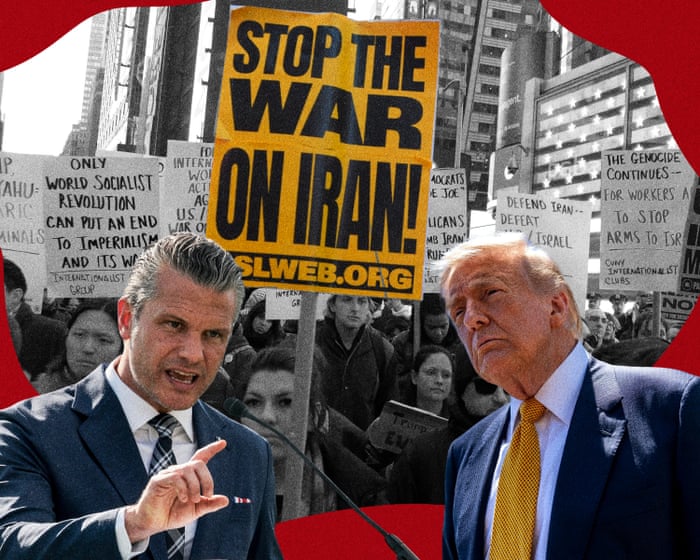
The war with Iran is reshaping America ahead of the midterms – how will it affect US voters at the polls? We’re live with political and global correspondents to answer your questions Sign in or sign up to join the conversation KafkasDog asks : As it’s increasingly clear that Trum
The war with Iran is reshaping America ahead of the midterms – how will it affect US voters at the polls? We’re live with political and global correspondents to answer your questions Sign in or sign up to join the conversation KafkasDog asks : As it’s increasingly clear that Trump is not mentally fit, and that allowing him to continue in his role further may (likely?) decimate the economy, if the Dems can secure, say, 60+ seats in the Senate, should they pursue Article 25? Lauren: A 60-plus majority!
Sure things are looking good for Democrats, but not that good. But as I’m based in Los Angeles, a city Trump just last night joked he might “let them take out” - I will indulge the question. There are many Democrats who have long believed (since Trump 1.0) that he was not fit to serve.
But then like now the process for actually involuntarily invoking the 25th Amendment originates with the vice president and the cabinet, not Congress. That alone should tell you how likely it is. Even then, if it were to reach Congress, which it would only if there was a dispute between the president and his vice president and cabinet over his capacity to serve, Congress would need a two-thirds majority in both chambers to install the vice president over the president.
I think the question Democrats are more likely to confront is whether they should again pursue impeachment against the president. And on that question, the party is really divided. While many believe he has committed impeachable offenses, they also recognize that their standing remains low and voters want action on the issues they care most about - the economy.
Given that there is almost no likelihood of a Senate majority great enough to convict the president, I think Democrats feel this avenue is likely less fruitful than using their political capital to push through legislation that they hope will repair their standing, give them some credibility ahead of 2028, and ideally for them, knee-cap Trump’s movement that way. Robert: Simple question, to which there is no simple answer. Congress does have the power to impede or limit a war for which it has not voted.
But the particular trajectory of the Iran conflict combined with Trump’s powerful grip on a Republican-controlled legislature has given him added flexibility. The 1973 War Powers Resolution - originally passed in the wake of the Vietnam war and intended to rein in a so-called “imperial president” - lays down that the administration must inform congress within 48 of committing forces to military action and must withdraw the forces within 60 to 90 days unless Congress votes to authorize the war or extend the time frame. Trump has been able to circumvent these restrictions through legal sleight of hand.
For example, the original conflict was suspended in early April - before the 60-day period had been reached - by a de facto ceasefire that was later formalized through the signing of a memorandum of understanding between Iran and US. When that agreement subsequently collapsed, the White House argued that the 60-day threshold started again from scratch. More generally, Trump has invoked his constitutional powers under Article II, Section 2 of the constitution, which asserts that the president is empowered to order targeted strikes, defend US forces abroad, or respond to threats abroad without congressional authorization.
Trump has also been able to reframe his actions as “defensive” by switching the primary goal of the war to re-opening the strait of Hormuz, the strategic waterway that is a conduit for one-fifth of the world’s oil. Iran’s closure of it in response to being attacked has presented a major challenge to the US and global economy. In short, the Congress did not approve the war, and while its constitutional and legislative powers give it the ability to challenge and hamper Trump’s actions, the power inherent in the presidency does not invest it with the powers to stop it per se.
Continue reading...
أخبار ذات صلة

White House defends Trump comment to let Iran 'take out' LA and San Diego
Gavin Newsom called the remarks "deranged", but the White House said Trump was warning of the risk of a nuclear Iran.
feeds.bbci.co.uk ·
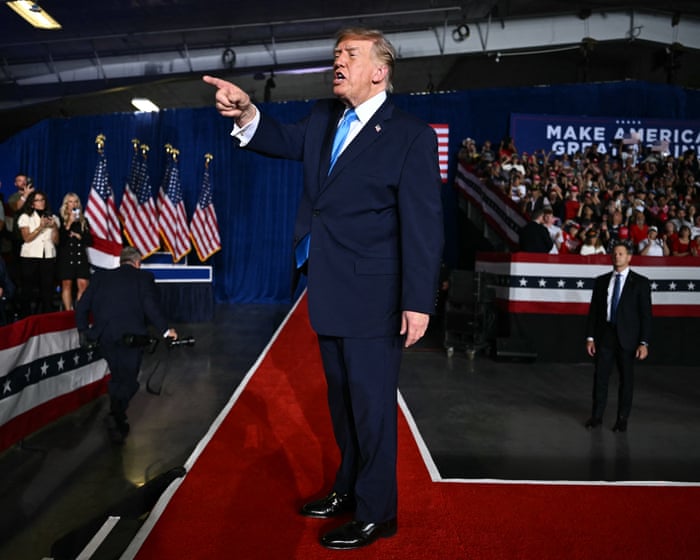
Trump’s suggestion that Iran could ‘take out’ LA or San Diego draws Republican rebuke
Congressional candidate Jim Desmond says he ‘served to protect Americans, not write off American cities’ A Republican candidate in San Diego has criticized Donald Trump after the US president suggested Iran could “take out” the city or Los Angeles. Trump has faced a chorus of con
World news | The Guardian ·
What new measures is Iran taking to counter US economic pressure?
Iran adopts a new arrangement to tackle economic challenges amid the US-imposed economic war and naval blockades.
Al Jazeera – Breaking News, World News and Video from Al Jazeera ·

Trump chooses top spy boss to run new AI taskforce
The US president said his national intelligence chief will lead the group as worries over AI grow.
feeds.bbci.co.uk ·
Trump’s recent statements on the economy are even more bonkers than usual | Steven Greenhouse
Our ‘genius’ president is revealing his ignorance of economics, fueling concerns about the threat he poses to the world Donald Trump recently made a bold claim about his abilities, writing on Truth Social : “The only control or ‘guardrails’ that AI needs is a STRONG AND SMART (Hi
Business | The Guardian ·