التقنية والذكاء الاصطناعي
Once again, NASA is asking for ideas to rescue Hubble from certain death
المصدر: Ars Technica - All content · نُشر
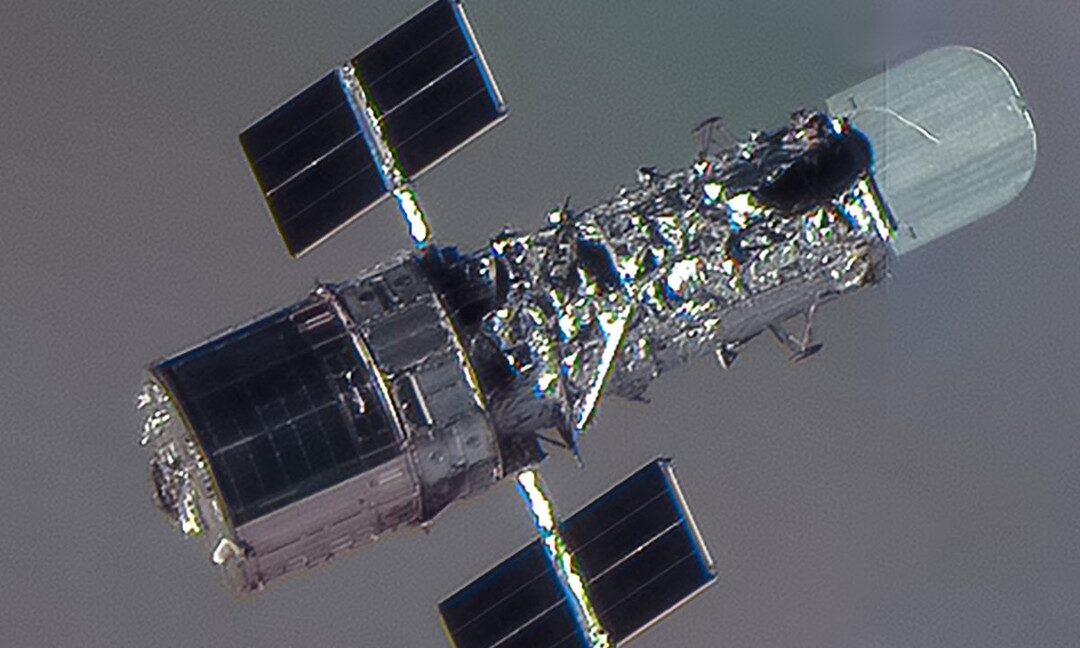
The Hubble Space Telescope still shines in the eyes of astronomers after 36 years in orbit, but it is not as nimble as it once was. Left alone, the observatory will plunge back into the atmosphere in the early-to-mid-2030s, closing the book on one of the most famous scientific in
The Hubble Space Telescope still shines in the eyes of astronomers after 36 years in orbit, but it is not as nimble as it once was. Left alone, the observatory will plunge back into the atmosphere in the early-to-mid-2030s, closing the book on one of the most famous scientific instruments of the century. NASA last raised the orbit of Hubble in 2002, when the Space Shuttle Columbia visited the observatory for a servicing mission.
The final shuttle servicing flight in 2009 did not reboost the telescope's orbit, and with the retirement of the shuttle fleet two years later, Hubble has steadily lost altitude with no way to stave off eventual destruction. The space agency released a Request For Information (RFI) on Thursday asking commercial companies for ideas on how to reboost, service, or a controlled disposal of Hubble. Responses are due November 30.
Specifically, NASA is looking for information about companies' current and near-term capabilities for capturing Hubble and boosting it to an altitude of at least 373 miles (600 km), enhancing the telescope's performance through, or guiding Hubble to a controlled reentry. Read full article Comments
أخبار ذات صلة
Hubble reveals a stunning twist in how the universe emerged from darkness
A surprising discovery by astronomers using the Hubble Space Telescope is challenging a leading explanation for how the early universe emerged from a dense fog of hydrogen roughly 13 billion years ago. Scientists once believed powerful winds from exploding stars helped radiation
All Top News -- ScienceDaily ·
Astronauts just gave the International Space Station a powerful upgrade
Two astronauts completed a 7-hour, 11-minute spacewalk to install a new solar array on the International Space Station, bringing NASA one step closer to a major power upgrade. Once the final array is installed on November 5, the station will have up to 30% more available power, s
All Top News -- ScienceDaily ·

A decade of carbon dioxide data from space gets an upgrade
Every day, two NASA space instruments known as the Orbiting Carbon Observatory-2 and -3 (OCO-2 and OCO-3) capture more than a million observations of sunlight reflecting off Earth's surface. Using the physics of how light travels through the air, an algorithm converts these raw d
Phys.org - latest science and technology news stories ·
NASA discovers Jupiter’s invisible shield is more complex than Earth’s
NASA’s Juno spacecraft has discovered that Jupiter uses a surprisingly complex system of powerful plasma waves and multiple shock regions to defend against the solar wind. The findings reveal major differences between Jupiter and Earth and could help scientists understand the eno
All Top News -- ScienceDaily ·
James Webb discovers a scorching lava planet with a “giant sunscreen”
A scorching lava planet 280 light-years away has surprised astronomers by apparently maintaining a thick atmosphere despite conditions that should have stripped it away billions of years ago. James Webb Space Telescope observations suggest that TOI-561 b reflects about 75% of inc
All Top News -- ScienceDaily ·