العلوم والبيئة
Hibernating bacteria can invade hospitals and survive outer space—but their energy budget reveals a weakness
المصدر: Phys.org - latest science and technology news stories · نُشر

A spore is a bacterium's survival capsule: dried almost solid and wrapped in protein armor, with its chemical processes shut down. Bacteria enter this state of hibernation when environmental conditions are unfavorable. What's left is close to indestructible: It can survive boilin
A spore is a bacterium's survival capsule: dried almost solid and wrapped in protein armor, with its chemical processes shut down. Bacteria enter this state of hibernation when environmental conditions are unfavorable. What's left is close to indestructible: It can survive boiling, desiccation, radiation and the vacuum of space.
NASA once bolted Bacillus spores to the outside of a satellite and left them in orbit for nearly six years; the ones shielded from sunlight were able to come back to life upon returning to Earth.
أخبار ذات صلة
Two astronauts who flew farther than anyone before are taking new NASA roles
Artemis II astronauts Victor Glover and Reid Wiseman are transitioning to emeritus status at NASA after their historic journey around the Moon earlier this year. The pair will continue advising and mentoring NASA teams as preparations accelerate for Artemis III and future lunar m
All Top News -- ScienceDaily ·
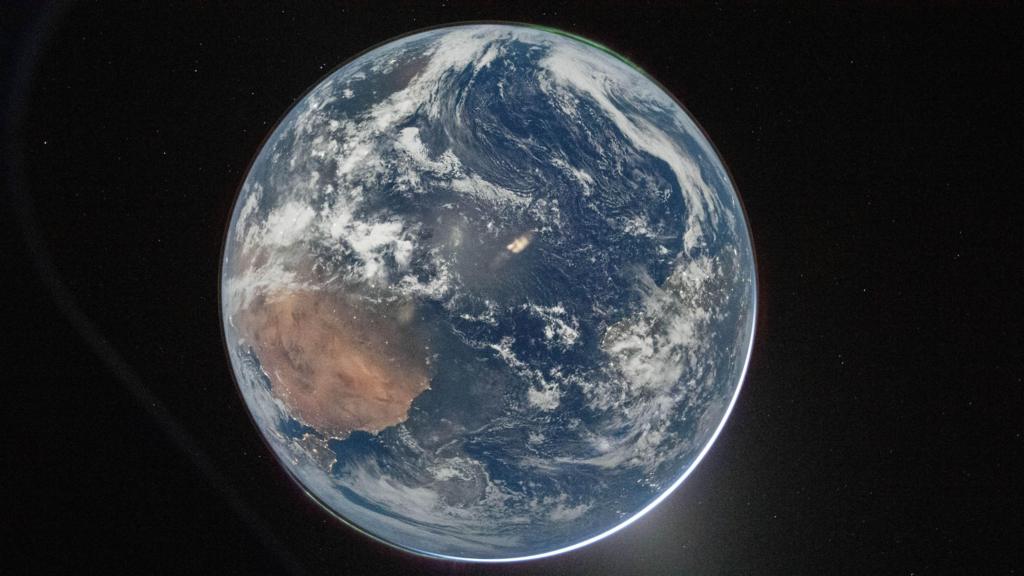
The 40 minutes when the Artemis crew loses contact with the Earth
As the astronauts pass behind the Moon they will experience a moment of silence and solitude as communication with the Earth is blocked.
feeds.bbci.co.uk ·

Quantum computer boldly goes where no quantum computer has gone before: Space
There's big news from the quantum world. A quantum computer has been used in space for the first time. The device was aboard a spacecraft in low Earth orbit and demonstrated technology that could eventually help solve a problem that has been bugging satellites for years.
Phys.org - latest science and technology news stories ·
1.7-billion-year-old fossils reveal a crucial clue to the rise of complex life
Scientists studying ancient Australian rocks uncovered more than 12,000 fossils from some of the oldest known eukaryotes on Earth. These early complex cells lived in settings ranging from coastal mudflats to the open sea, but only where oxygen was available. Oxygen-free environme
All Top News -- ScienceDaily ·
Earth is tearing apart beneath the Pacific Northwest
Scientists have captured a subduction zone off Vancouver Island in the process of tearing itself apart, revealing that these massive tectonic systems may die piece by piece rather than all at once. The discovery could help explain ancient plate fragments, volcanic activity, and h
All Top News -- ScienceDaily ·